Am I a Candidate for Permanent Non-Surgical Revision Rhinoplasty?
Most surgeons default to revision rhinoplasty, despite its inconvenience, downtime, and unpredictable outcomes. Under the expertise of Dr. Eric Joseph, permanent non-surgical revision rhinoplasty using Silikon-1000® offers a precise, structural alternative. We have been using Silikon-1000® for over 27 years, achieving wonderful success and hundreds of happy patients. It can correct irregularities, asymmetry, and other concerns without additional surgery, providing long-lasting, natural-looking results.
Below, explore real before and after cases that highlight common concerns addressed with this approach and help determine whether you may be a good candidate. To further your research, we have included details on the evolution of permanent non-surgical revision rhinoplasty, alongside a comprehensive video featuring Dr. Eric Joseph outlining essential considerations and who makes an ideal candidate. You’ll also find an in-depth educational webinar featuring Dr. Joseph and renowned Beverly Hills facial cosmetic surgeon Dr. Robert Kotler, where they discuss advanced techniques and how this treatment is customized to each patient’s unique anatomy and goals.
The Evolution of Permanent Non-Surgical Rhinoplasty
What is it? Who's a good candidate? Permanent non-surgical nose jobs in our practice utilize a permanent filler called Silikon-1000. Silikon-1000 is purified polydimethylsiloxane or medical-grade silicone oil that has been FDA approved since 1996 for injection into the eyeball for retinal purposes. We use it off-label to fill imperfections, indentations, and similar issues in the nose. I prefer to use a sterilized glass syringe due to the high-pressure nature of the injection, along with a small needle, which allows for precise and accurate product placement.
The concept of a permanent, non-surgical nose job was first described by Dr. Richard Webster in the 1980s. Dr. Webster, a renowned rhinoplasty specialist, documented a series of around 2,000 patients from 1964 to 1984. Over that 20-year period, he demonstrated the precision, safety, and permanence of medical-grade silicone oil for non-surgical revision rhinoplastic procedures, enhancing the results of patients who had already achieved good outcomes with conventional surgery. The use of liquid injectable silicone for this purpose dates back 60 years to its origins in New York City, passed down through generations of rhinoplasty experts.
It's important to differentiate this approach from temporary gel fillers, which are more popular today. We do not recommend temporary gel fillers in the nose for several reasons. They can occasionally lead to necrosis or tissue death, particularly in patients who have undergone prior nasal surgeries and may have compromised blood flow. Additionally, there have been rare cases of temporary gel fillers causing blindness, stroke, infections, and biofilm formation. Hyaluronic acid, commonly used in temporary gel fillers, poses similar risks due to its thick gel consistency, which can block blood vessels if inadvertently injected into them, potentially causing serious complications, especially in patients with a history of rhinoplasty.
In contrast, we have utilized Silikon-1000 for 25 years with experiences echoing those of my mentors in the field. It has proven extremely safe, offering excellent precision, permanence, and long-term stability, particularly beneficial for patients with prior rhinoplasty surgeries. Unlike temporary gel fillers, Silikon-1000 treatments typically require one to three sessions for optimal results and cannot be removed once injected, underscoring the importance of careful injection techniques.
In summary, there is a six-decade history of safety behind Silikon-1000, and our own 25-year experience with thousands of patients has been overwhelmingly positive, especially for those with previous rhinoplasty procedures.
Your Guide to Permanent Non-surgical Rhinoplasty
“Saddle Nose” Deformity
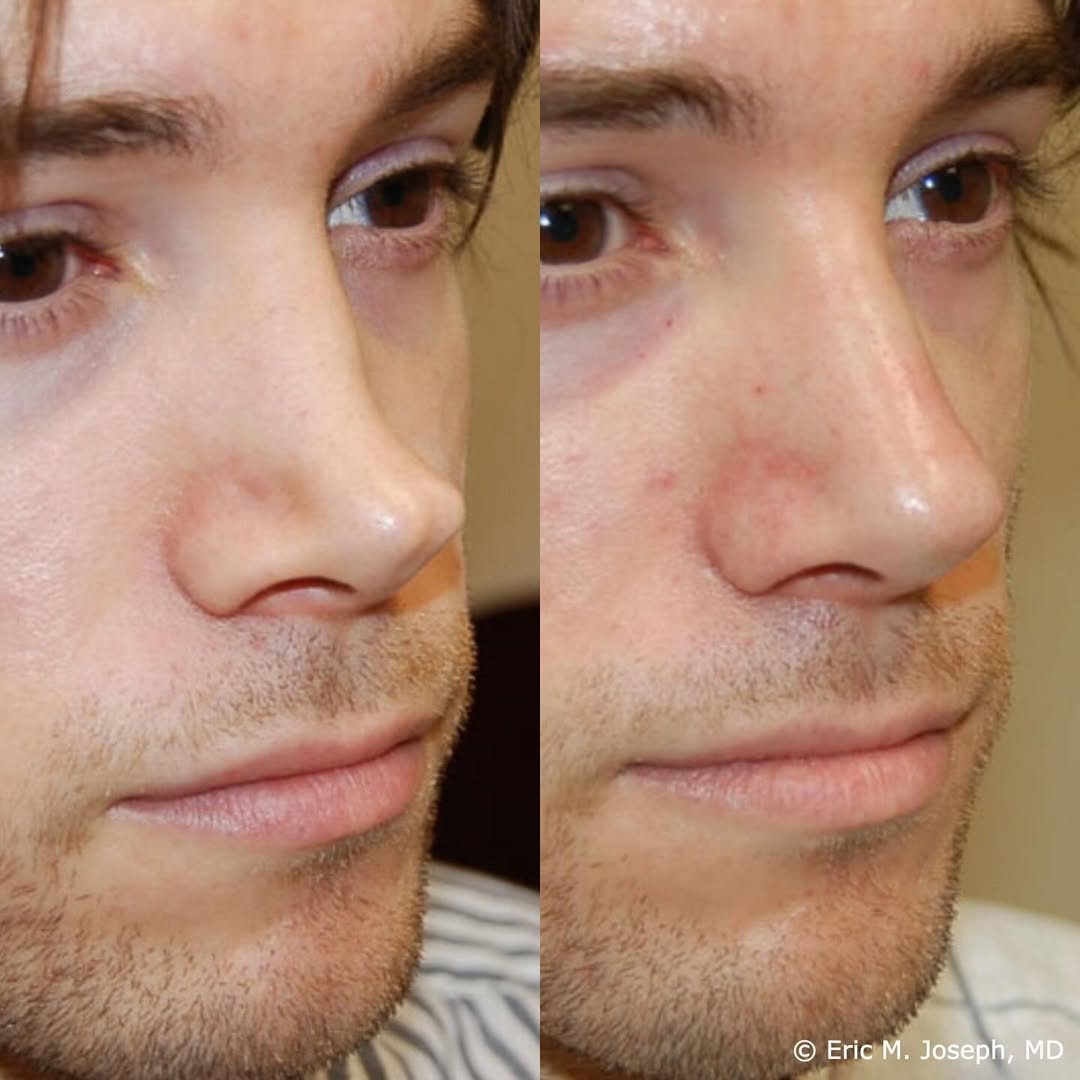
Our patient was bothered by many stigmata of surgery. Before his treatment, you can see an over-resected nasal appearance with a “saddle nose” deformity, tip irregularities, a pinched tip, and nostril asymmetry. Adding small amounts of permanent volume to his nose has led to a more pleasing, and less “operated” nasal appearance. Learn more here.
Over-Rotated Tip
Her previous surgeries left her with an over-rotated tip, nostril retraction, and a deep supratip indentation that gave the appearance of a dorsal hump. She is seen before and after two treatments with microdroplet Silikon-1000, a permanent soft-tissue filler. We were able to achieve improvement of her nostril retraction, along with tip lowering and camouflaging of her small profile bump. Learn more here.

Our patient was dissatisfied with the asymmetrical height of her nostrils on the front view, as well as the appearance of a deep supratip break on profile. Silikon-1000 was carefully used to lower her left nostril and fill the supra-alar creases on both sides. Additional volume was added to the deep supratip, radix, and infra-tip lobule to achieve subtle tip derotation. Learn more here.

Nostril Asymmetry

Our patient is shown after a single permanent non-surgical nose job treatment to improve nostril asymmetry following a previous rhinoplasty. Her original surgery was done many years ago by another provider. She was generally happy with the overall appearance of her nose, but she was bothered by the fact that her left nostril margin appeared higher than the right. Learn more here.
Underprojected Tip
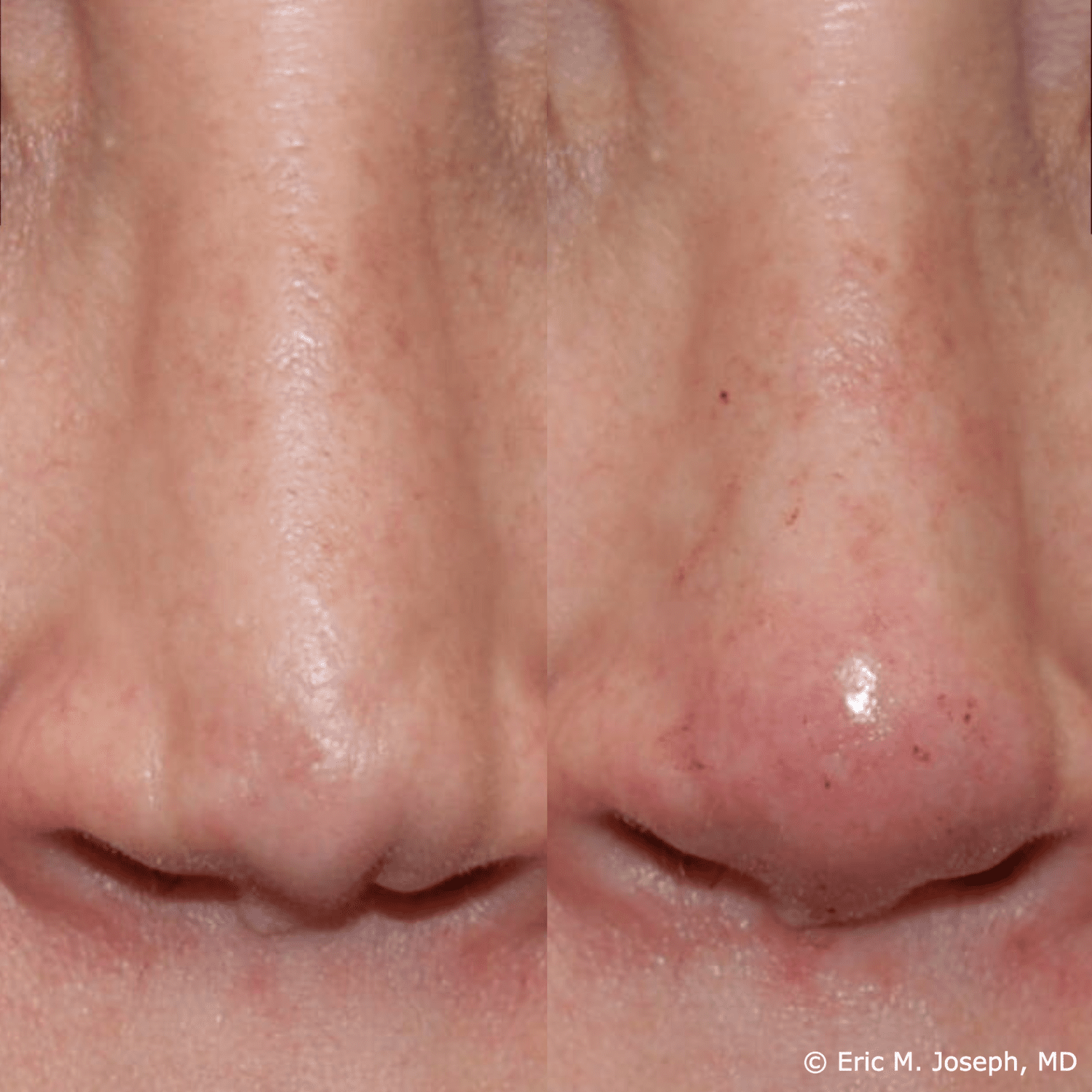
After three surgeries, she was left with a wide, crooked nose and an underprojected tip. Her rib cartilage reconstruction eventually resorbed, leaving a flat tip with indentations from collapsing skin. After a single treatment with microdroplet Silikon-1000®, you can see a more natural looking tip with improved projection and the elimination of many of those indentations. Learn more here.
Pointy Nasal Tip
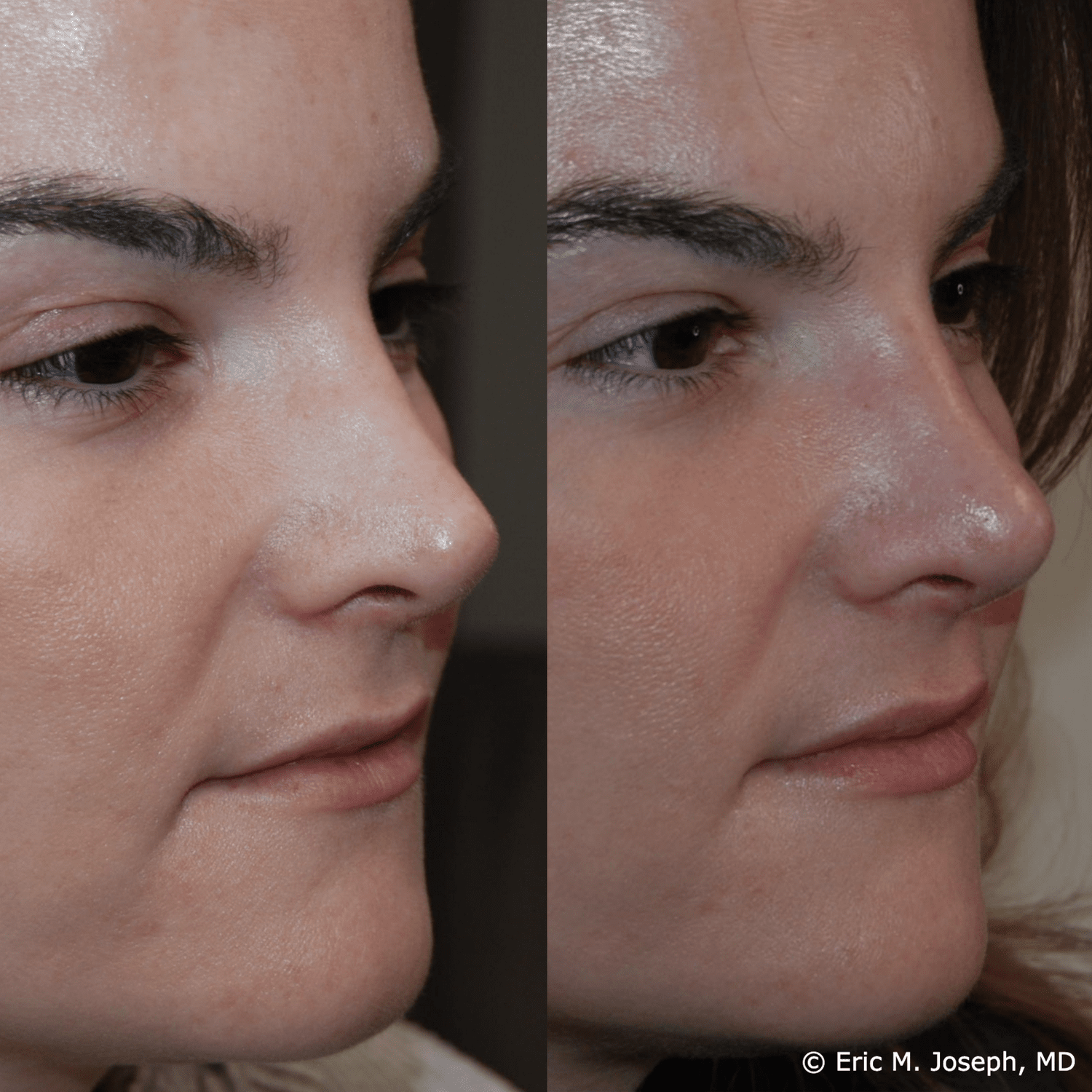
This patient’s previous rhinoplasty performed left with a sharp edge of bone along her left nasal sidewall, and retracted nostrils. We injected microdroplet Silikon-1000 into her left nasal sidewall, both nostril margins, and around her overly pointy nasal tip appearance. Learn more here.
Excessive Nostril Show
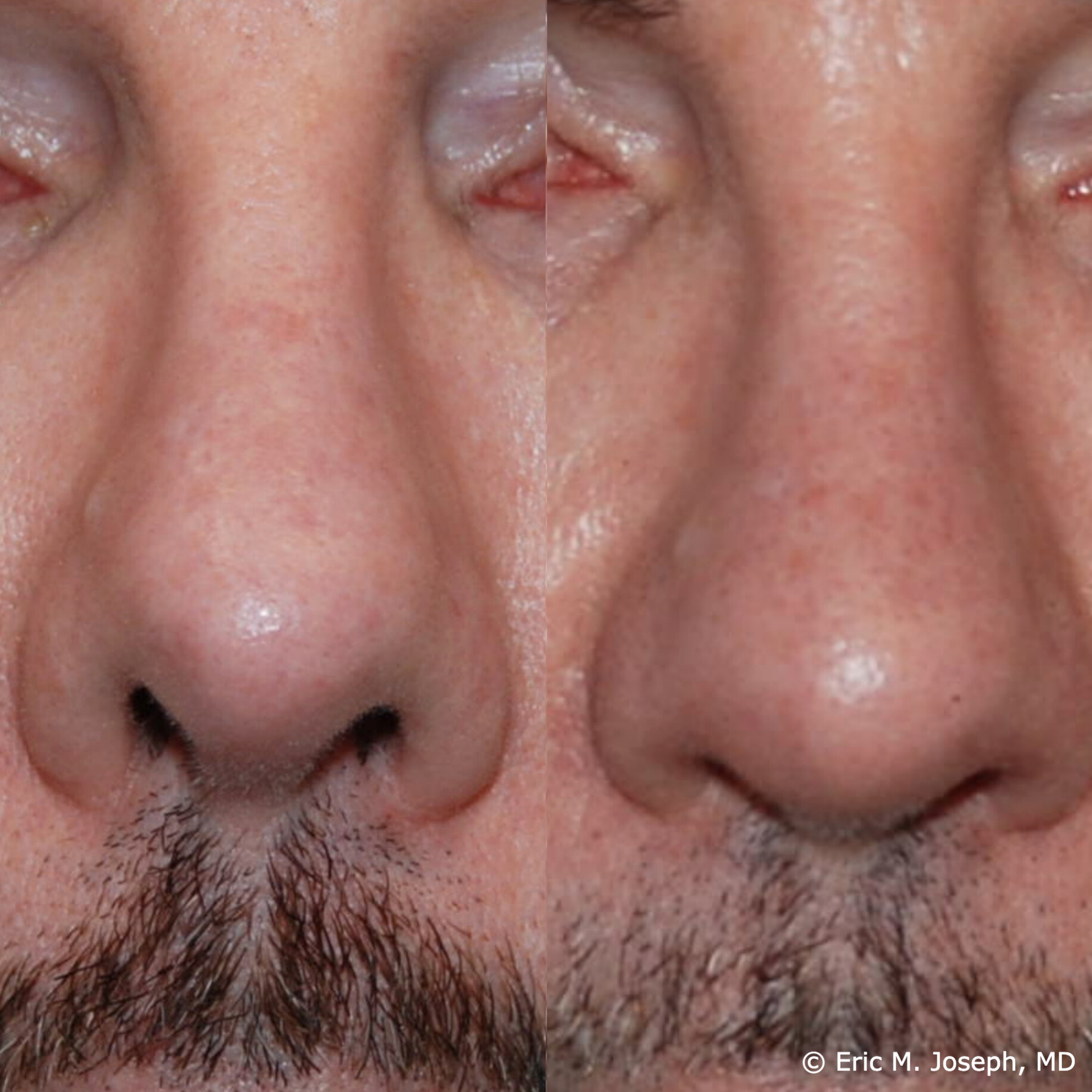
Our patient previously underwent two rhinoplasty procedures, the second involving rib grafting. He was concerned about excessive nostril show on frontal view and did not wish to undergo additional surgery. The after photo was taken one month following his second treatment with microdroplet Silikon-1000. The nasal tip appears less operated, with markedly improved symmetry of the nostril margins. Learn more here.
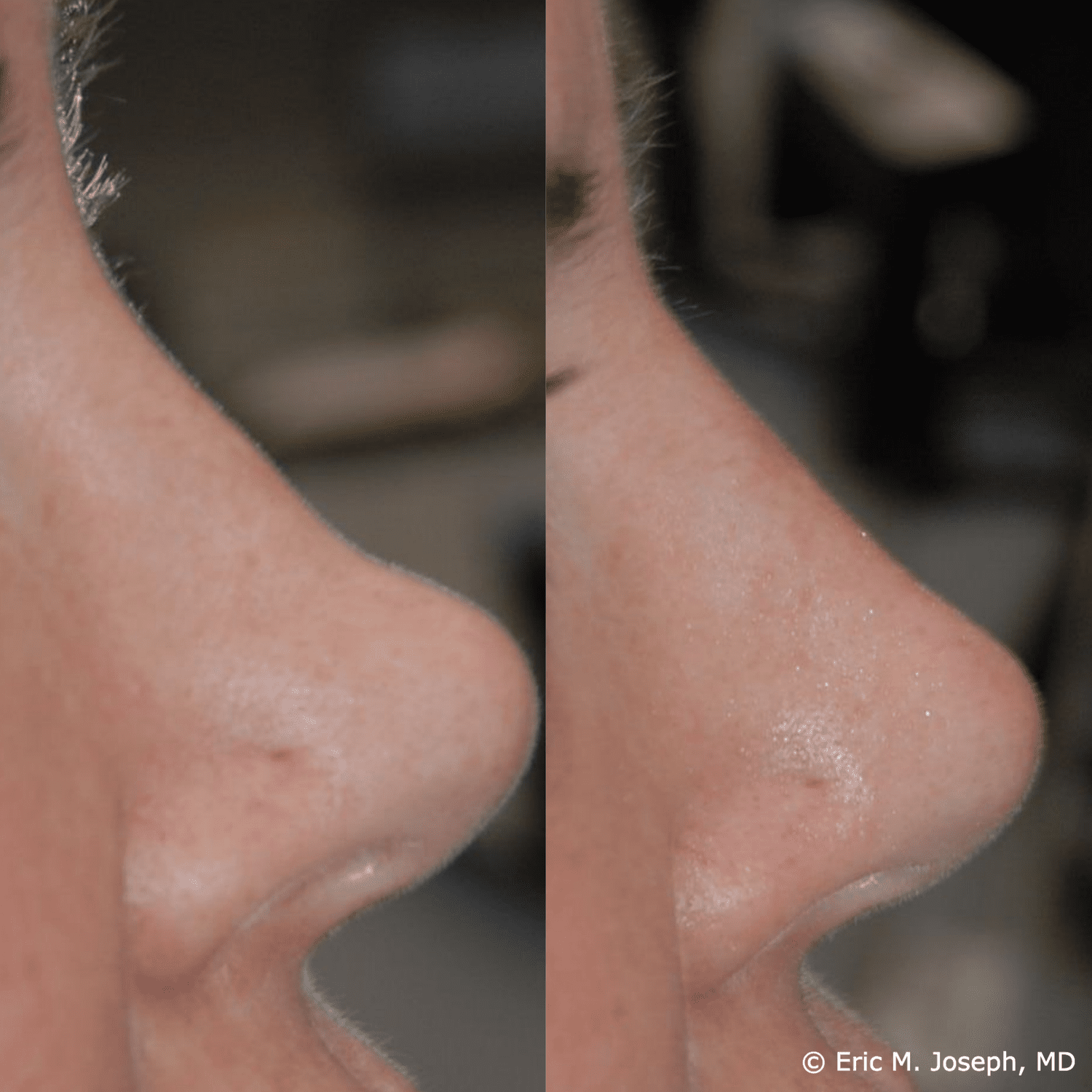
Our patient was dissatisfied with the appearance of her nasal bridge after previous rhinoplasty surgery performed elsewhere. The after photo is immediately following a single treatment with microdroplet Silikon-1000. She may require another treatment, when swelling goes down, at monthly intervals or longer. Learn more here.
Nasal Bridge Raising
Our patient was dissatisfied with the appearance of the indentation of her left bridge, and excessive nostril show. You can see a straighter and more pleasing nasal appearance after her second treatment with Silikon-1000. Learn more here.
Crooked Nasal Appearance
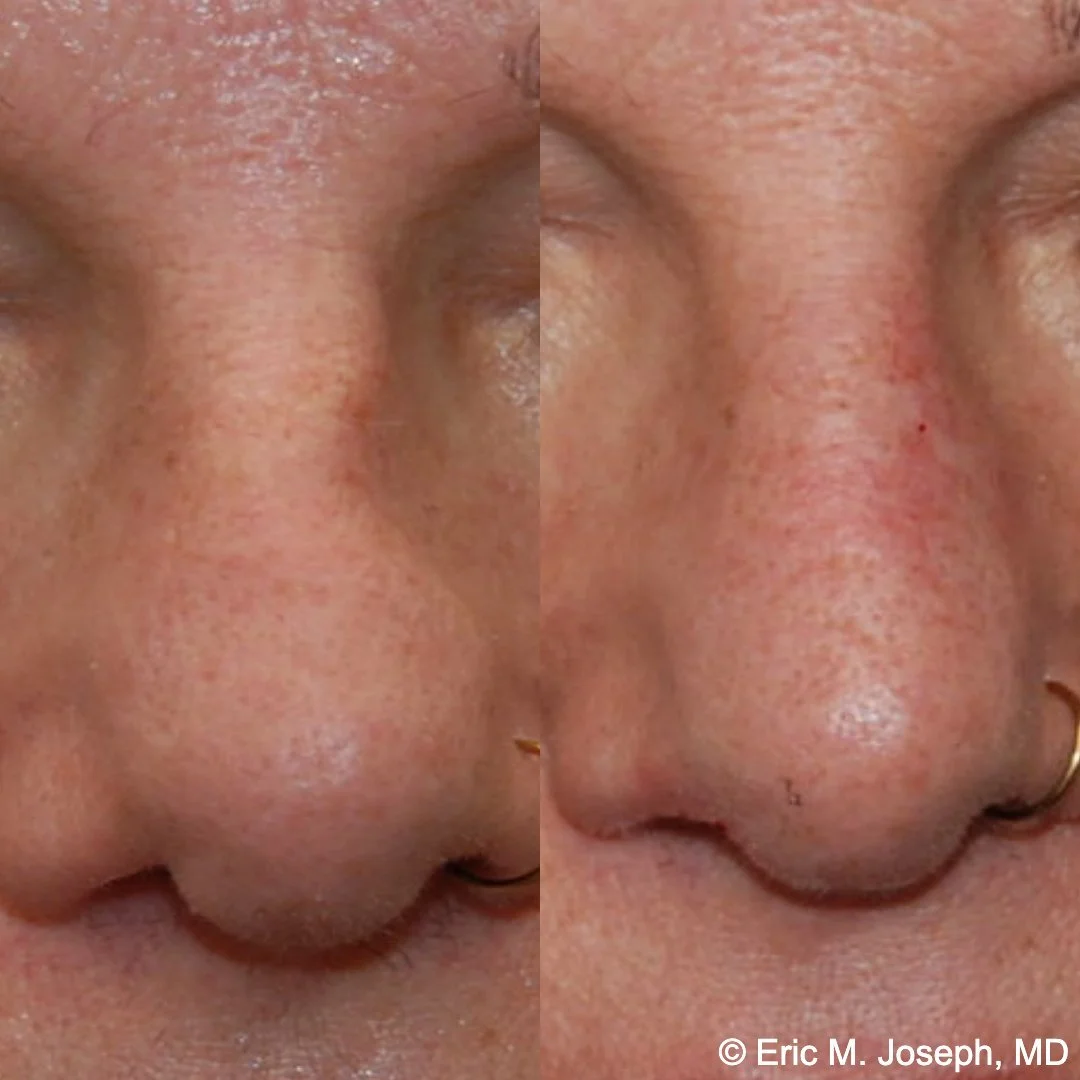
Our patient was happy with the appearance of his nose, except he was self-conscious of a profile bump. Photos are after a third treatment with microdroplet Silikon-1000 to raise the upper bridge of his nose. Learn more here.
Our patient is seen after two permanent non-surgical nose job treatments to improve her nasal appearance after previous rhinoplasty surgery. You can see a less pinched and straighter nasal appearance with improved nostril symmetry. Learn more here.
Dorsal Hump
Pinched Nasal Tip
This patient had rhinoplasty surgery 20 years ago, and was self conscious about the appearance of her nasal tip. Since she has very thin nasal skin, these visible edges of cartilage called bossae occurred years after her original rhinoplasty. Silikon-1000 was an excellent alternative to revision rhinoplasty surgery, especially when treating nasal tip irregularities after previous surgery. Learn more here.
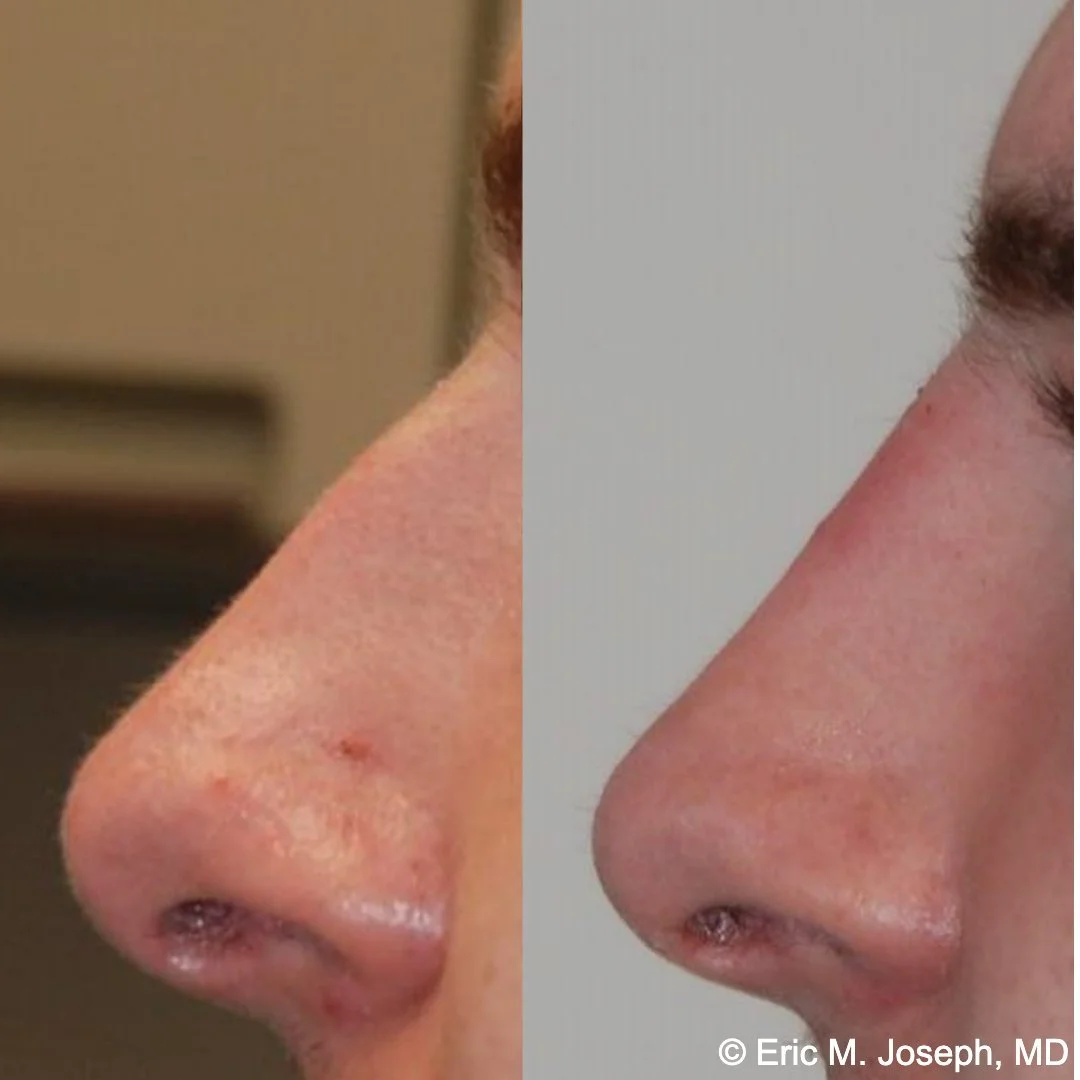
Our patient is seen 6 months following two permanent non-surgical nose job treatments, and two permanent chin augmentation treatments with microdroplet Silikon-1000. You can see natural looking and permanent nasal profile bump camouflaging, and increased chin projection. Learn more here.
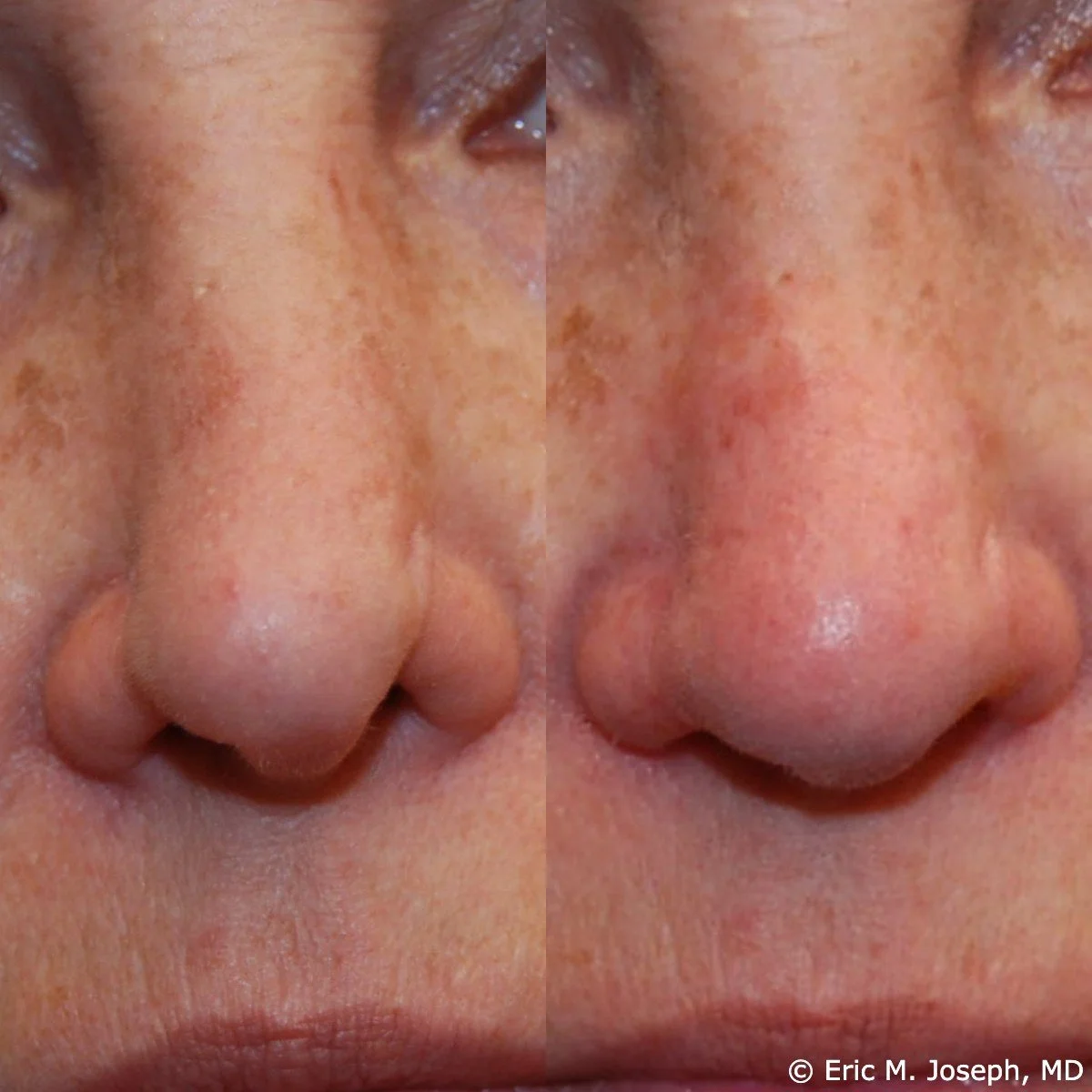
Nasal "Bossae"
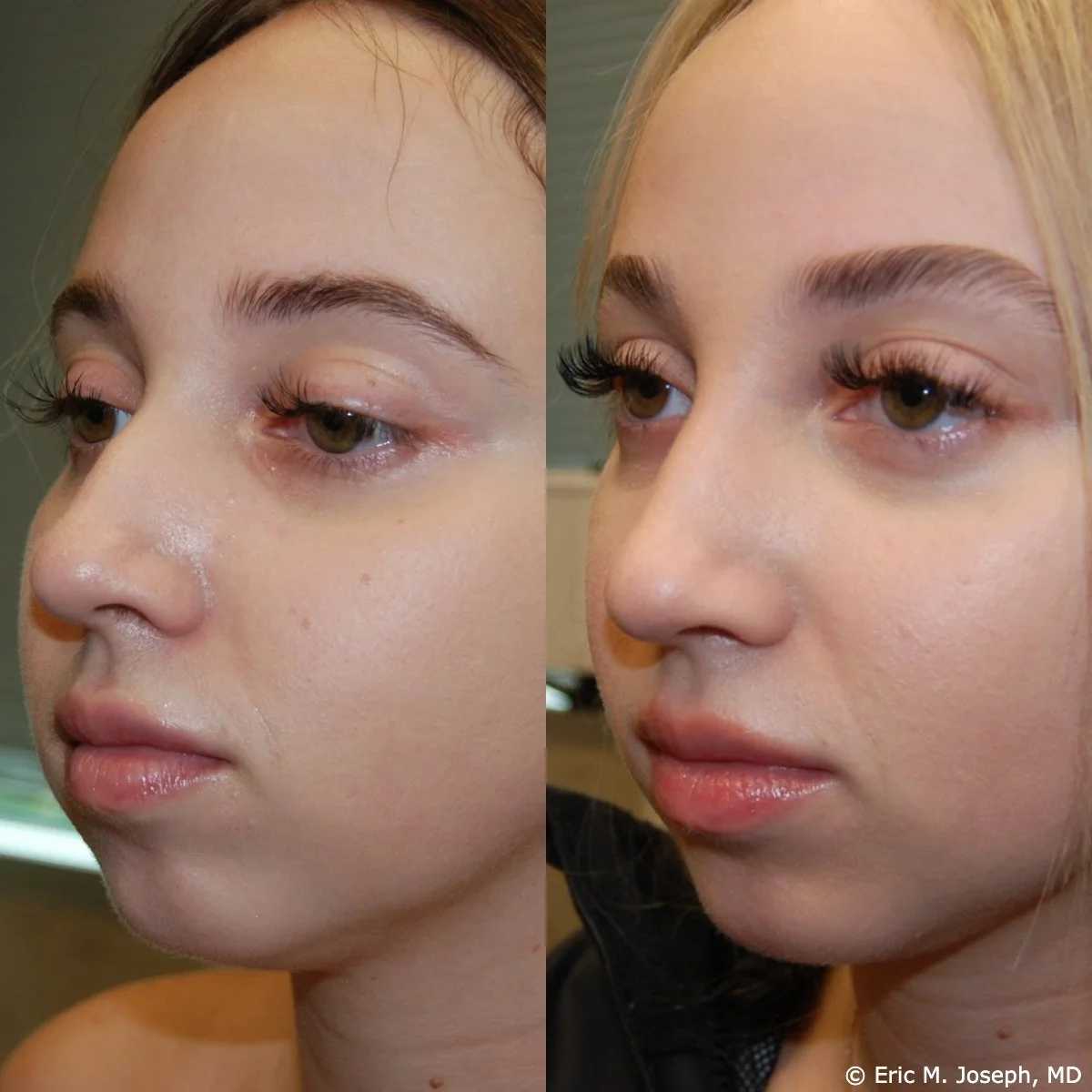
Straightened Nasal Bridge
Our patient developed an indentation along the side of her nose after trauma. Two treatments with microdroplet Silikon-1000 led to a permanent straightening of her nasal appearance. Learn more here.
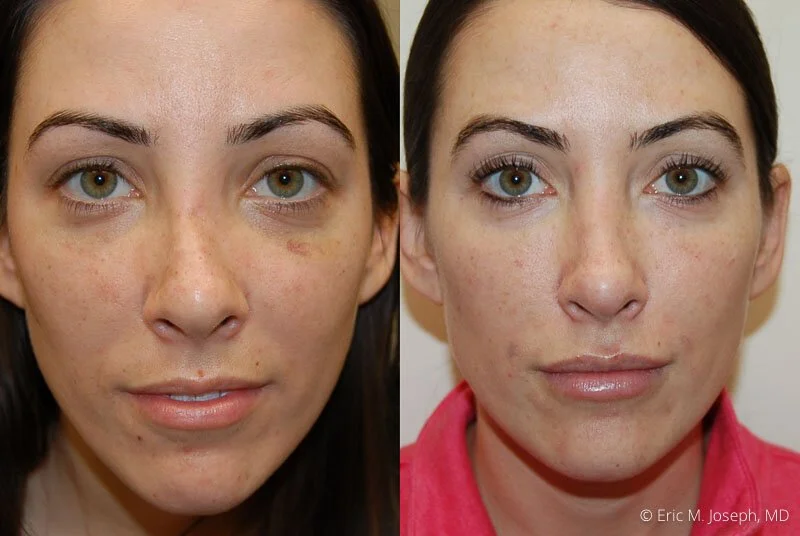
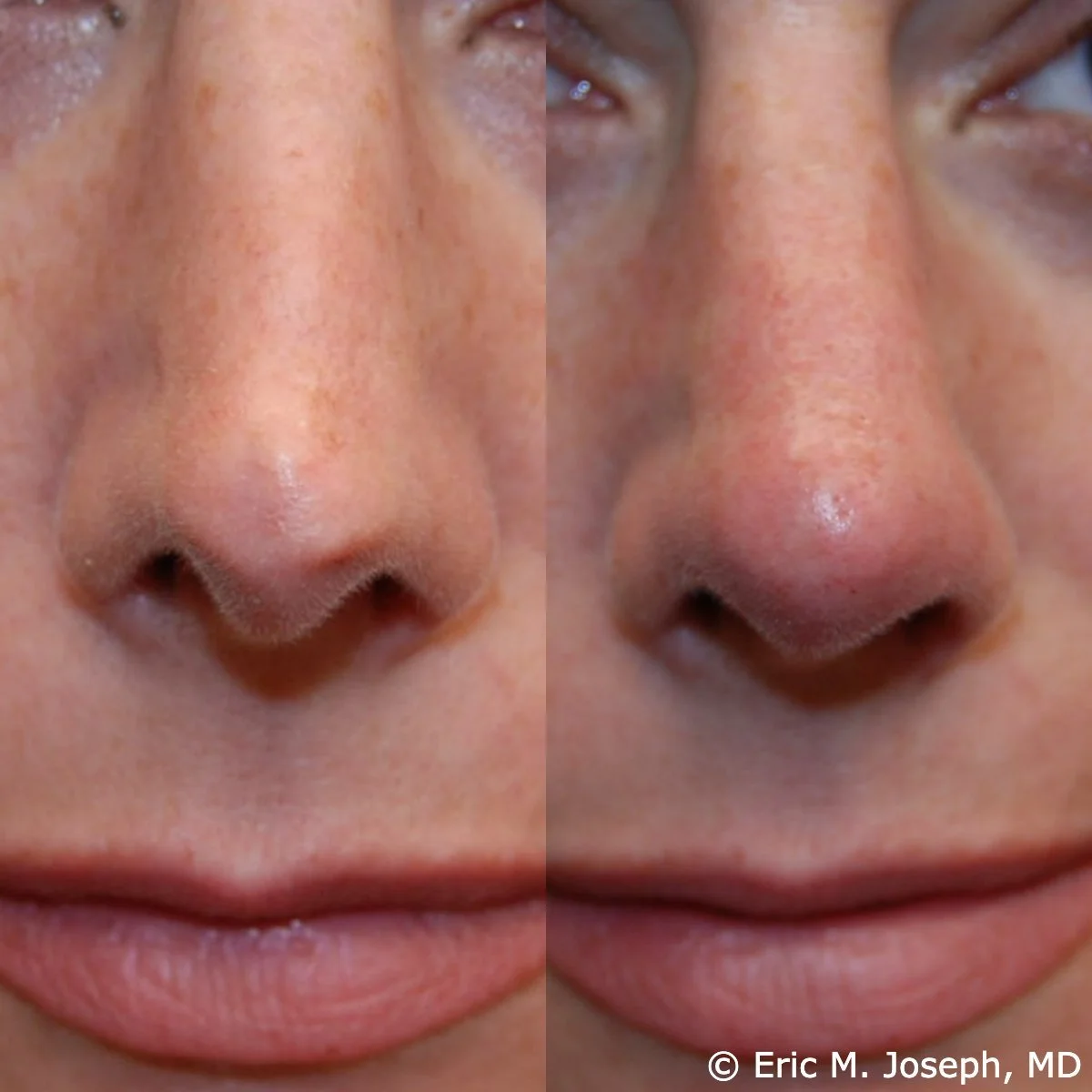
She didn’t like the pinched and asymmetrical appearance of her nasal tip after previous rhinoplasty surgery. Her visible tip cartilages are referred to as nasal “bossae”. Two treatments with microdroplet Silikon-1000 were necessary to provide a straighter, and less operated widened tip appearance. Learn more here.
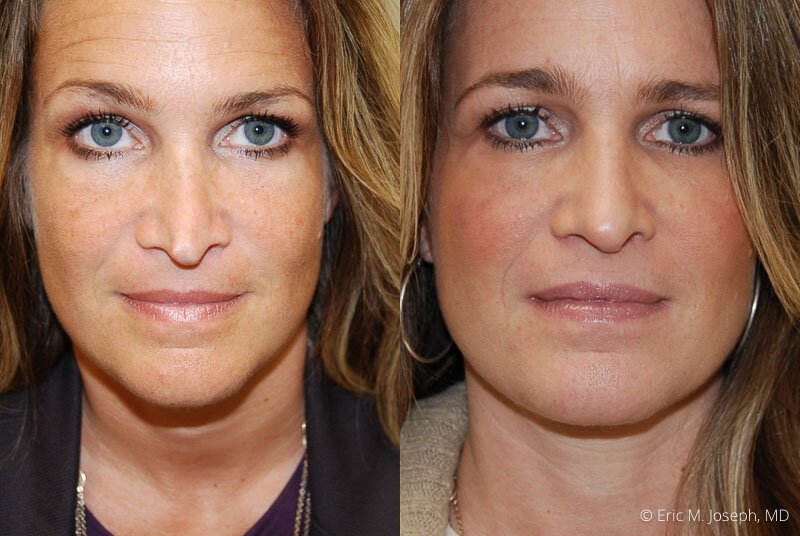
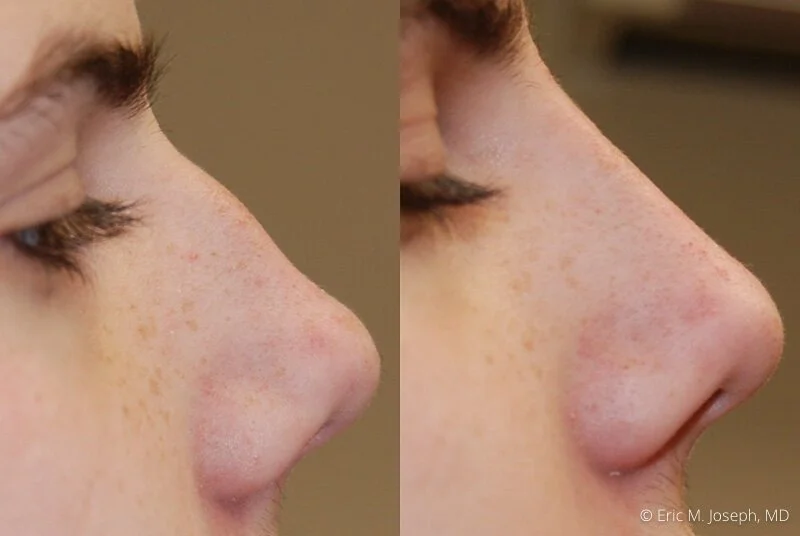
Microdroplet Silikon-1000 is the best option to restore nasal tip symmetry and to provide nostril lowering after the previous rhinoplasty. Our patient had rhinoplasty elsewhere and requested a permanent nonsurgical approach for improving her tip symmetry. Learn more here.
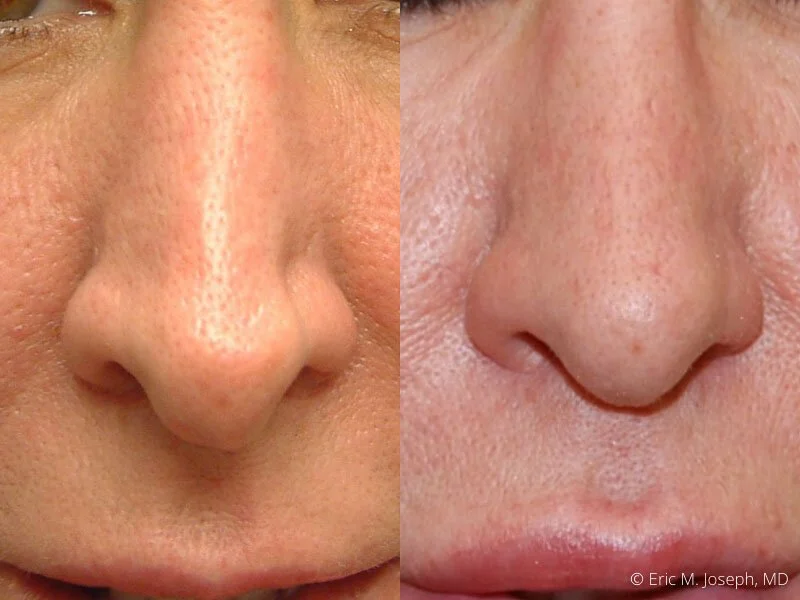
Small Dorsal Hump
This is an example of permanent nonsurgical rhinoplasty with microdroplet Silikon-1000 for camouflaging a small dorsal hump. These permanent results are after two treatments. Learn more here.
An Expert Discussion on the Art of Permanent Non-Surgical Rhinoplasty
F.A.Q
Is non-surgical rhinoplasty permanent?
Dr. Joseph's expertise is with microdroplet Silikon-1000, a permanent soft tissue filler that has been a welcome alternative to temporary gel fillers for our patients. The most commonly performed procedures with Silikon-1000 in our practice are permanent nonsurgical nose job treatments. If people experience minor irregularities after previous rhinoplasty surgery, Silikon-1000 may be a safe alternative to revision rhinoplasty surgery with no downtime.
How are non-surgical rhinoplasties performed?
Dr. Joseph's expertise is with microdroplet Silikon-1000, a permanent soft tissue filler that has been a welcome alternative to temporary gel fillers for our patients. The most commonly performed procedures with Silikon-1000 in our practice are permanent nonsurgical nose job treatments. If people experience minor irregularities after previous rhinoplasty surgery, Silikon-1000 may be a safe alternative to revision rhinoplasty surgery with no downtime.
What is Silikon 1000™?
Silikon-1000 is a filler made from pure silicone oil that is 10 times more viscous than water. It is cleared by the FDA for injection in the eyeball to treat certain types of retinal detachment. We have been successfully using microdroplet Silikon-1000 as a permanent off-label cosmetic filler for over 20 years with hundreds of satisfied patients. Several treatments (1-3) are typically necessary to obtain the desired result as we proceed conservatively. We only use fractions of one milliliter for microdroplet facial treatments.
Why choose a permanent filler?
Permanent nonsurgical rhinoplasty treatments with Silikon-1000 have a fifty year track record of safety, precision, and permanence. Unlike temporary gel fillers, microdroplet silikon-1000 treatments are never associated with necrosis, blindness, infection, biofilm, or migration. The results of the microdroplet treatment yield permanent, natural looking results whereas temporary fillers typically dissolve within 6 months to a year.
Can Silikon 1000™ used in conjunction with temporary fillers?
It is best to allow temporary fillers to dissipate completely before having microdroplet treatments with Silikon 1000™. Because the volume of temporary fillers changes over its lifespan, it is advisable to wait. That being said, there are options for dissolving temporary fillers, and we can start Silikon-1000 nasal treatments if most temporary filler is gone, depending on your examination. If you wish to see if you're a candidate for Silikon-1000 nasal treatments, please schedule a consultation.
What about the risk?
In our experience, complications with microdroplet Silikon-1000 are infrequent. If too much Silikon-1000 is injected, it should be considered permanent and irremovable, so the expertise and technique of your doctor is critical for achieving a permanent and pleasing result. Complications like nodules, bumps and prolonged redness may occur after any injectable filler treatment - these have only occurred in a handful of people treated by us over the last twenty years. Unlike temporary gel fillers, microdroplet silikon-1000 treatments are never associated with necrosis, blindness, infection, biofilm, or migration.