Revision Rhinoplasty Before & After: Correcting a Droopy Tip and a Polly Beak Appearance
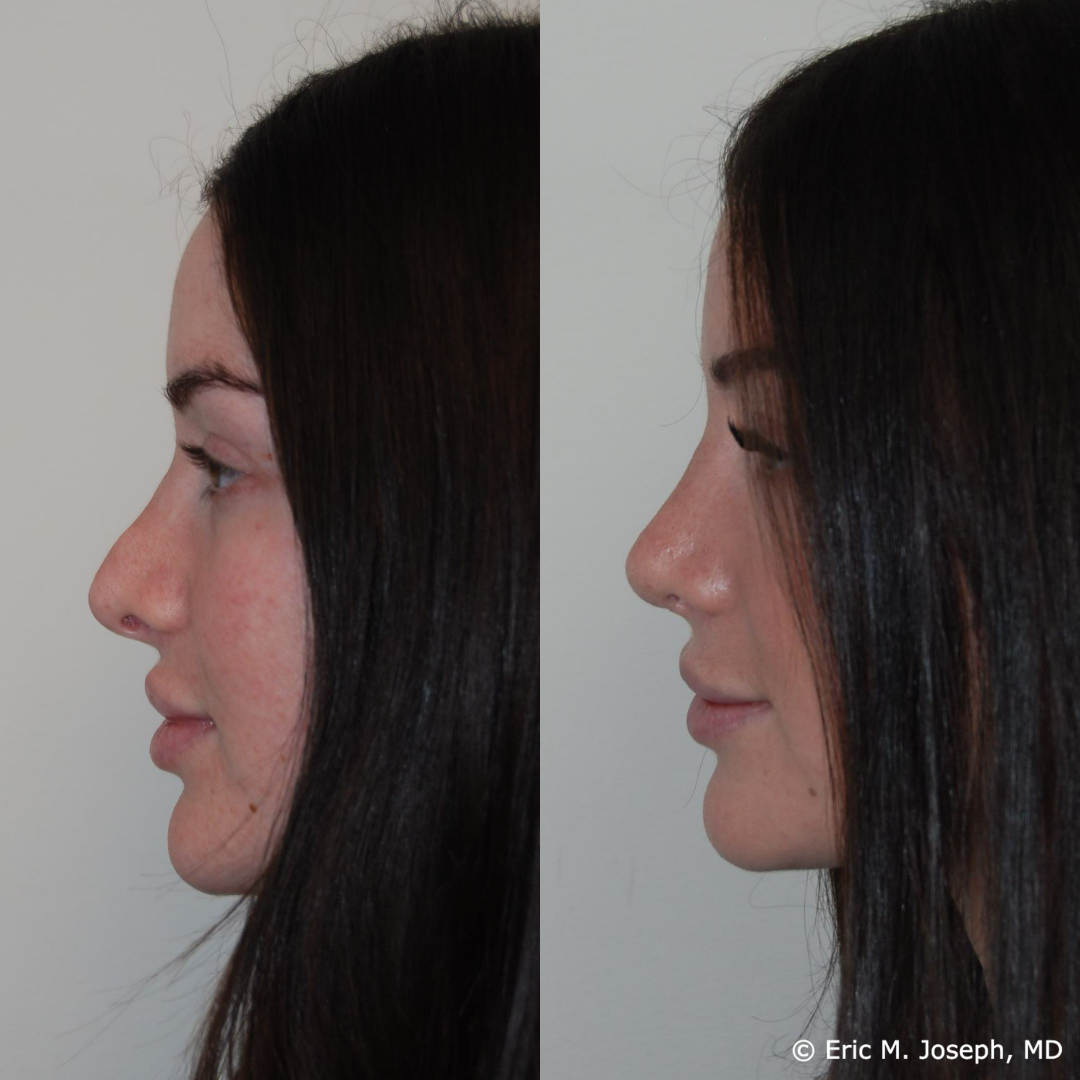
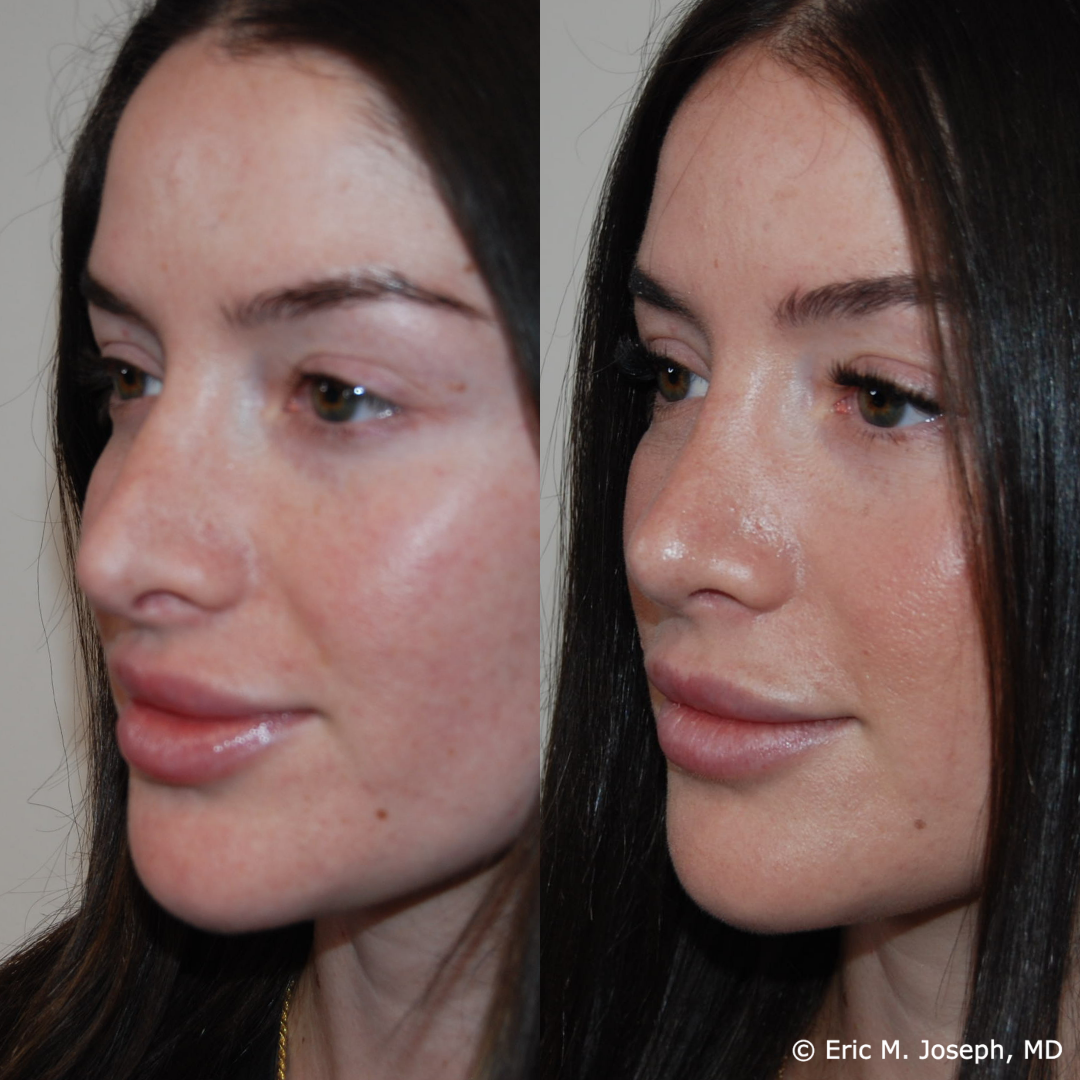
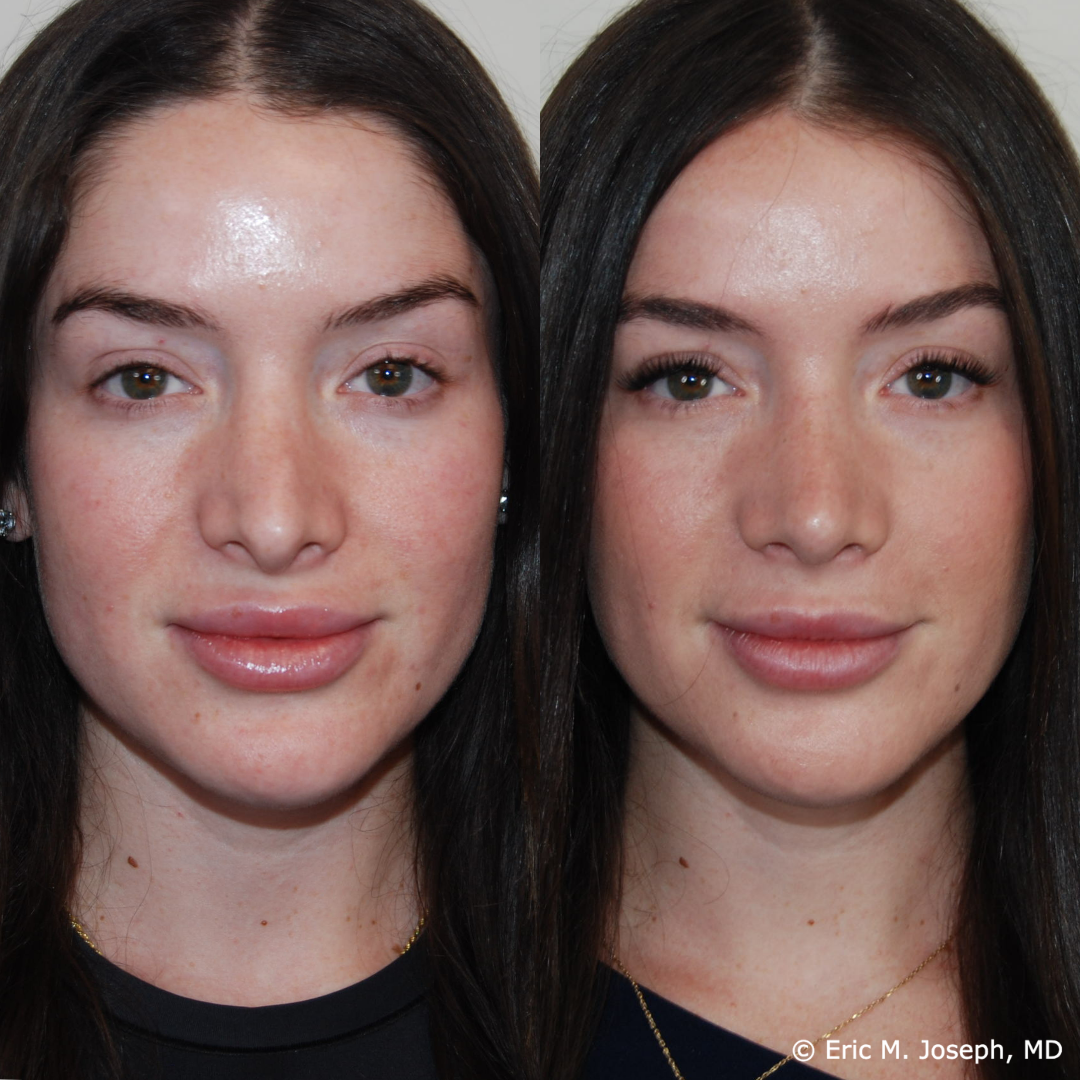
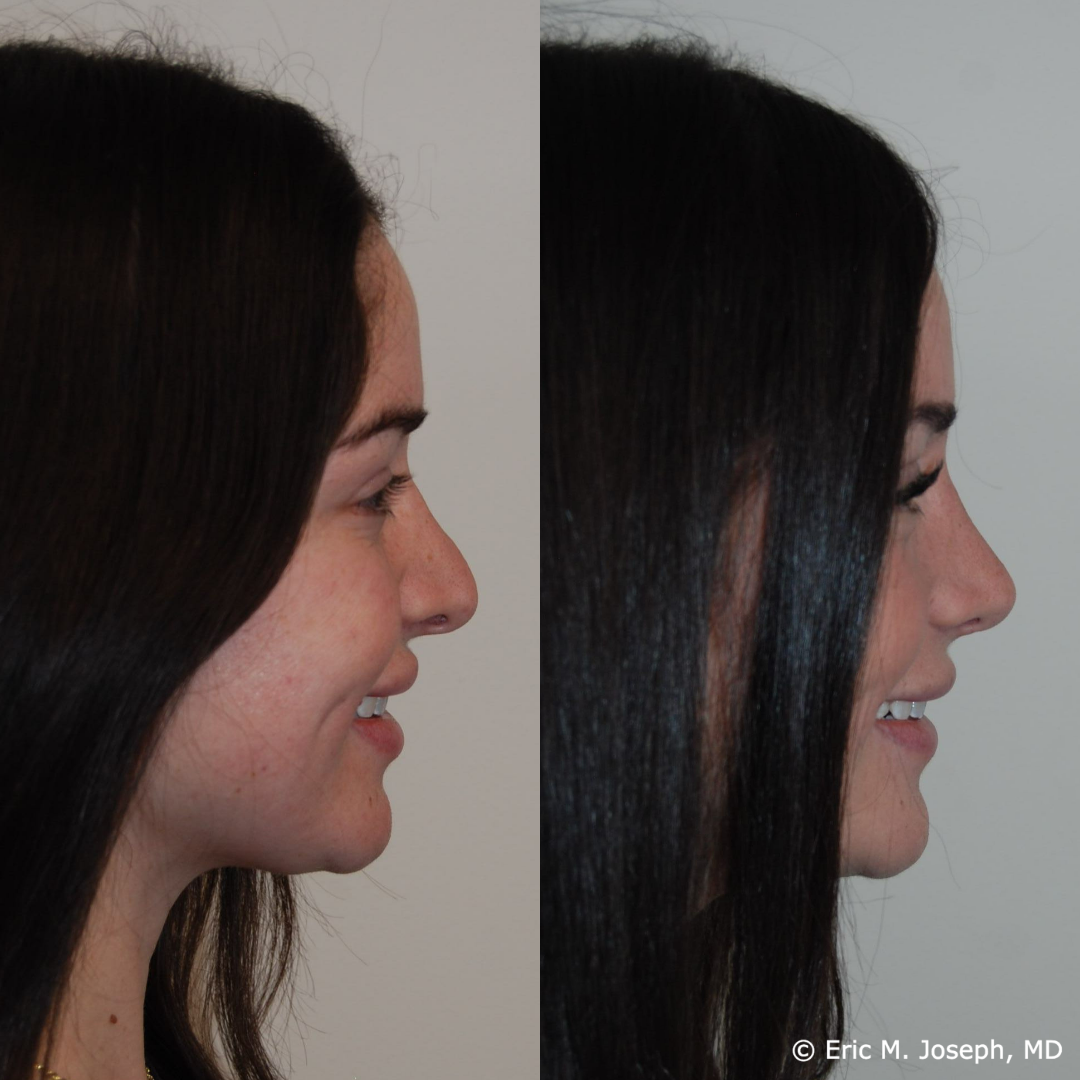
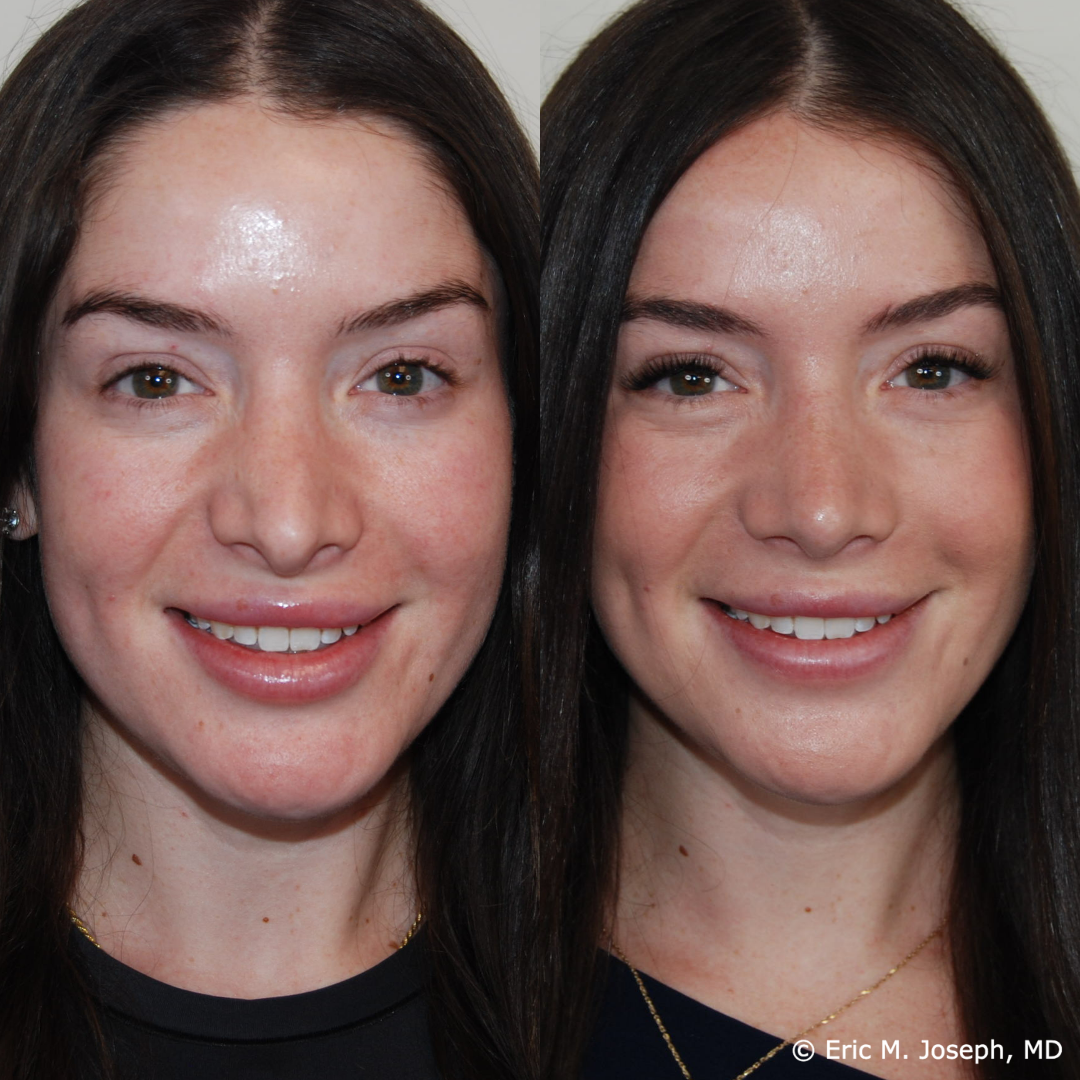
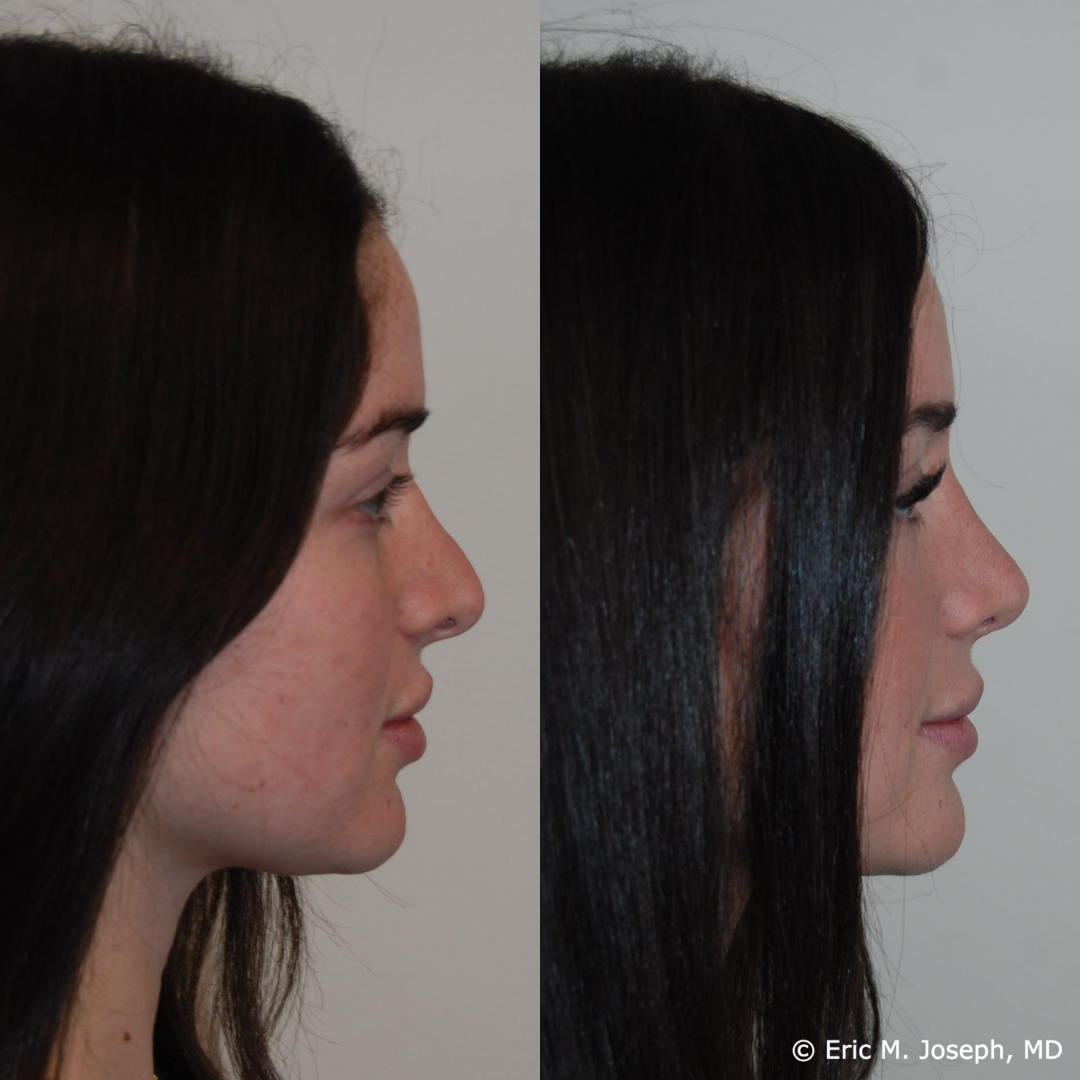
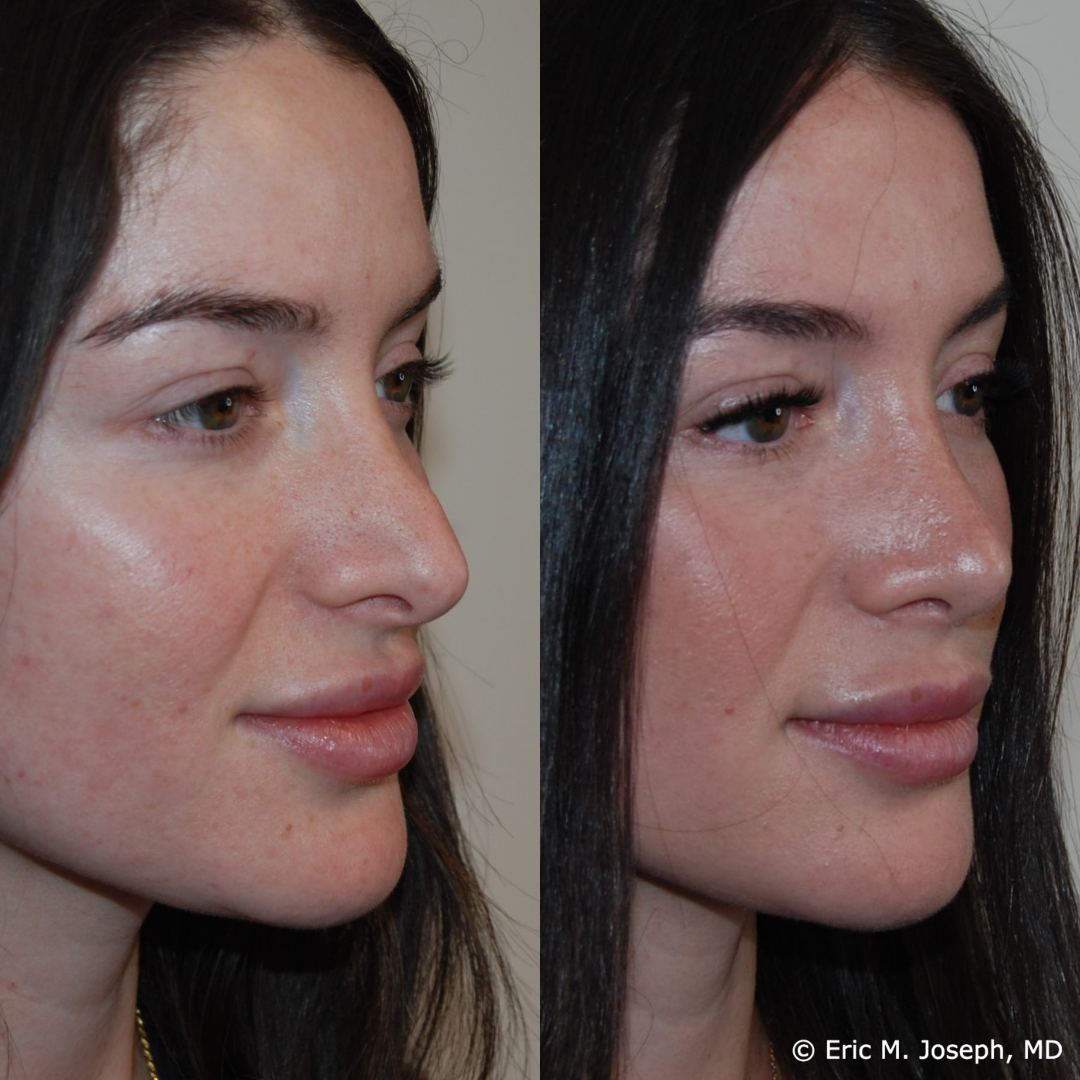
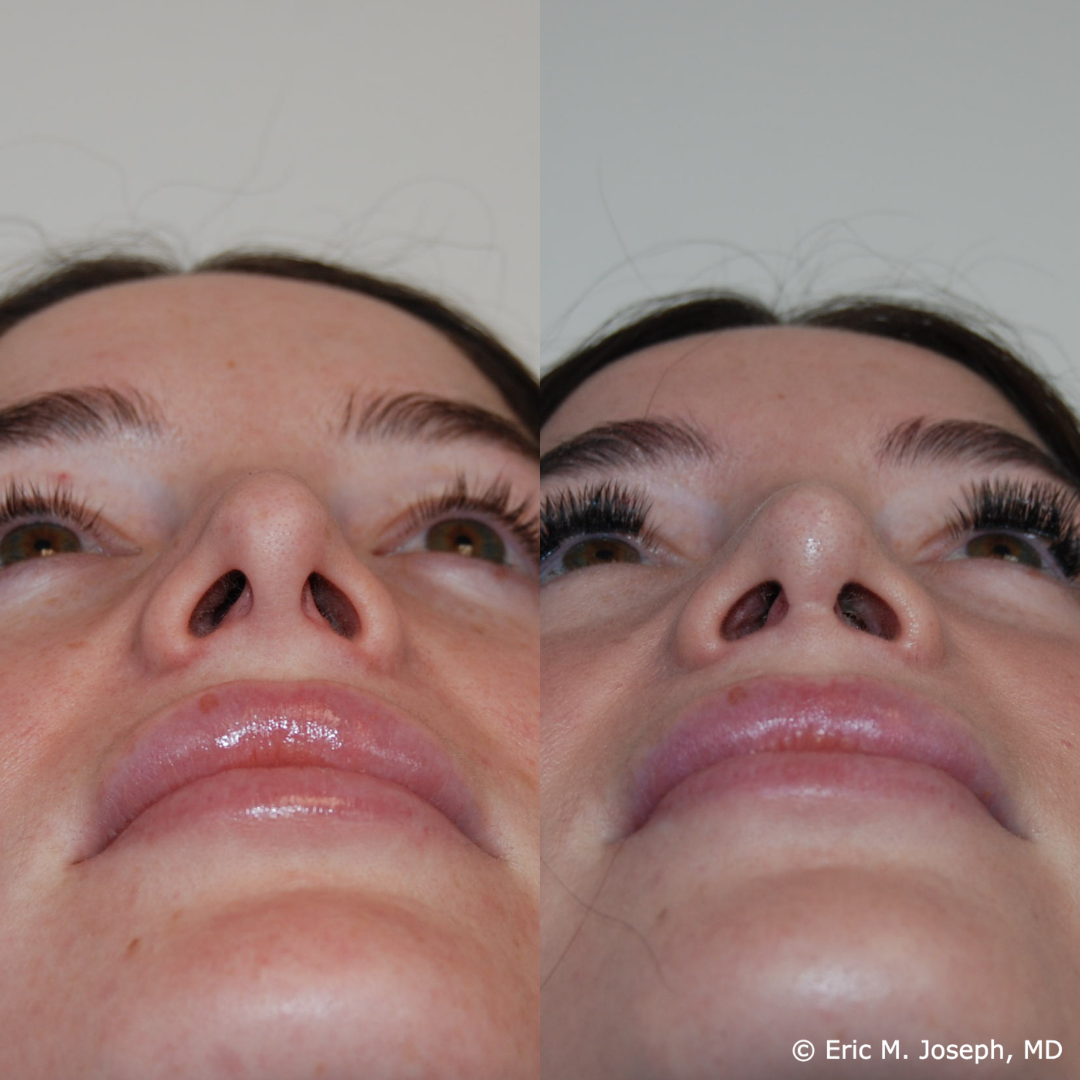
Revision Rhinoplasty #33
Our beautiful patient came to us for revision rhinoplasty, due to dissatisfaction with her nasal appearance after a primary rhinoplasty that was performed in 2017. She had a fairly common problem that may develop in people, if a rhinoplasty surgeon does not place adequate cartilaginous tip support during the time of rhinoplasty surgery. She developed a droopy tip and a polly beak appearance. A polly beak is when the bridge of the nose sticks out further than the tip, and this tends to be associated with a droopy tip. Additionally, our patient had nasal obstruction from a severely deviated nasal septum, and an overly wide appearance with lack of tip definition on front view, and tip droopiness with smiling. The saving grace was that the previous surgeon did not touch her nasal septum, so all grafting material that was necessary to support and refine her nasal tip was utilized from her own nose, not frozen cadaver cartilage, which is sometimes necessary. We corrected her deviated nasal septum, narrowed her nose, deprojected and rotated her tip for a less distracting, better breathing, and more feminine nasal appearance without stigmata of previous rhinoplasty. We are most grateful that she has allowed us to post her stunning photos.
