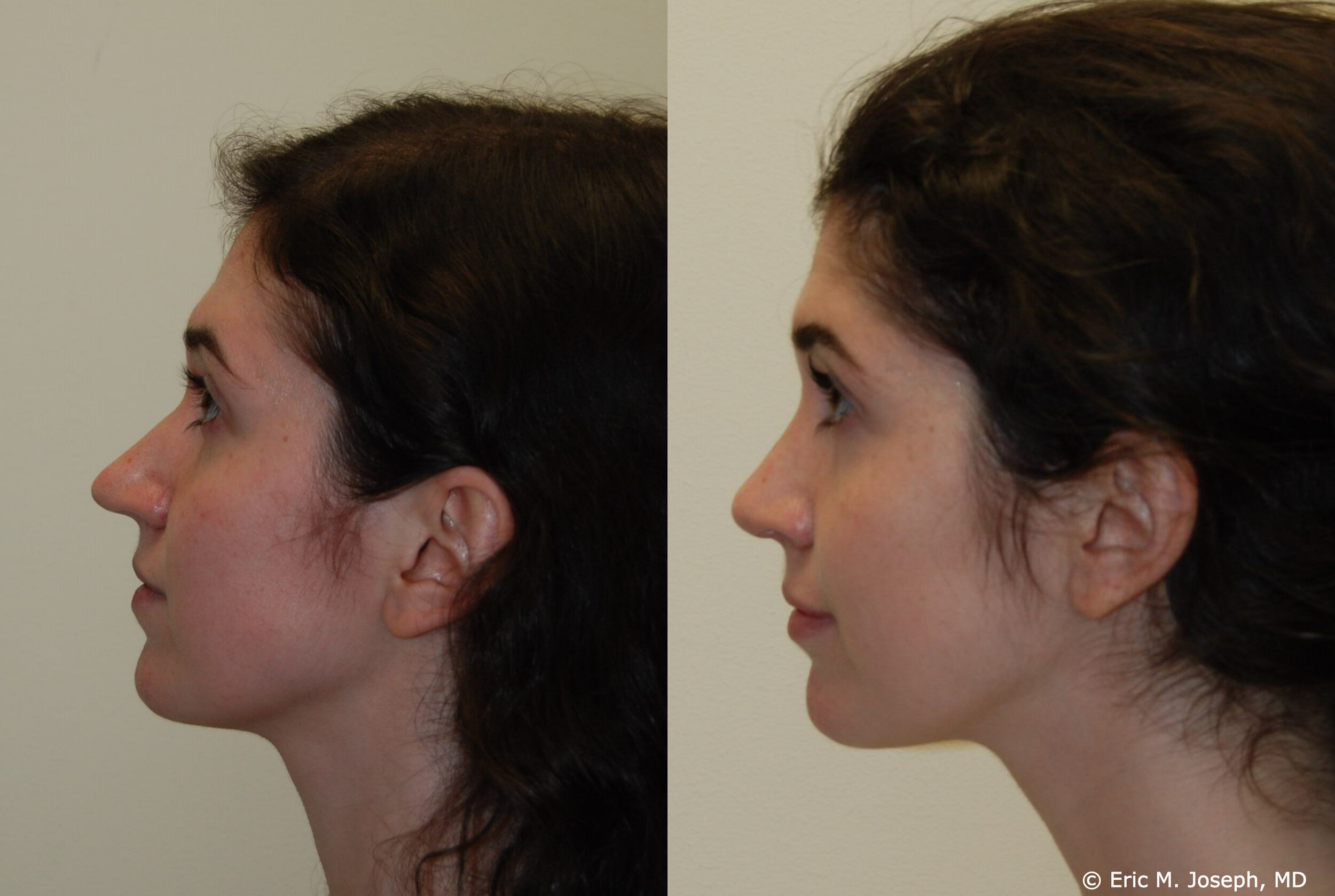
Revision Rhinoplasty Before & After: Tip De-projection and Narrowing

Revision Rhinoplasty #22

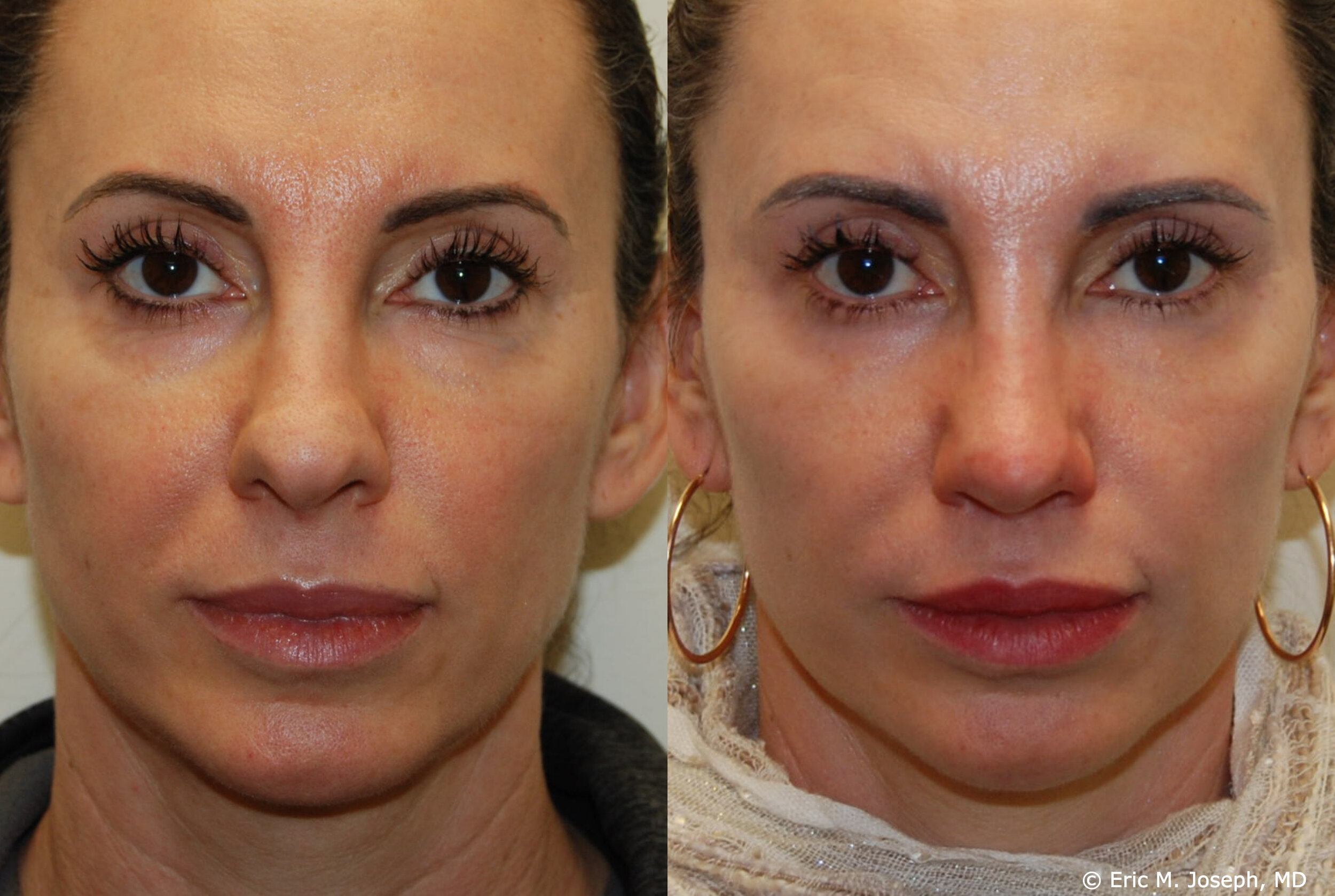
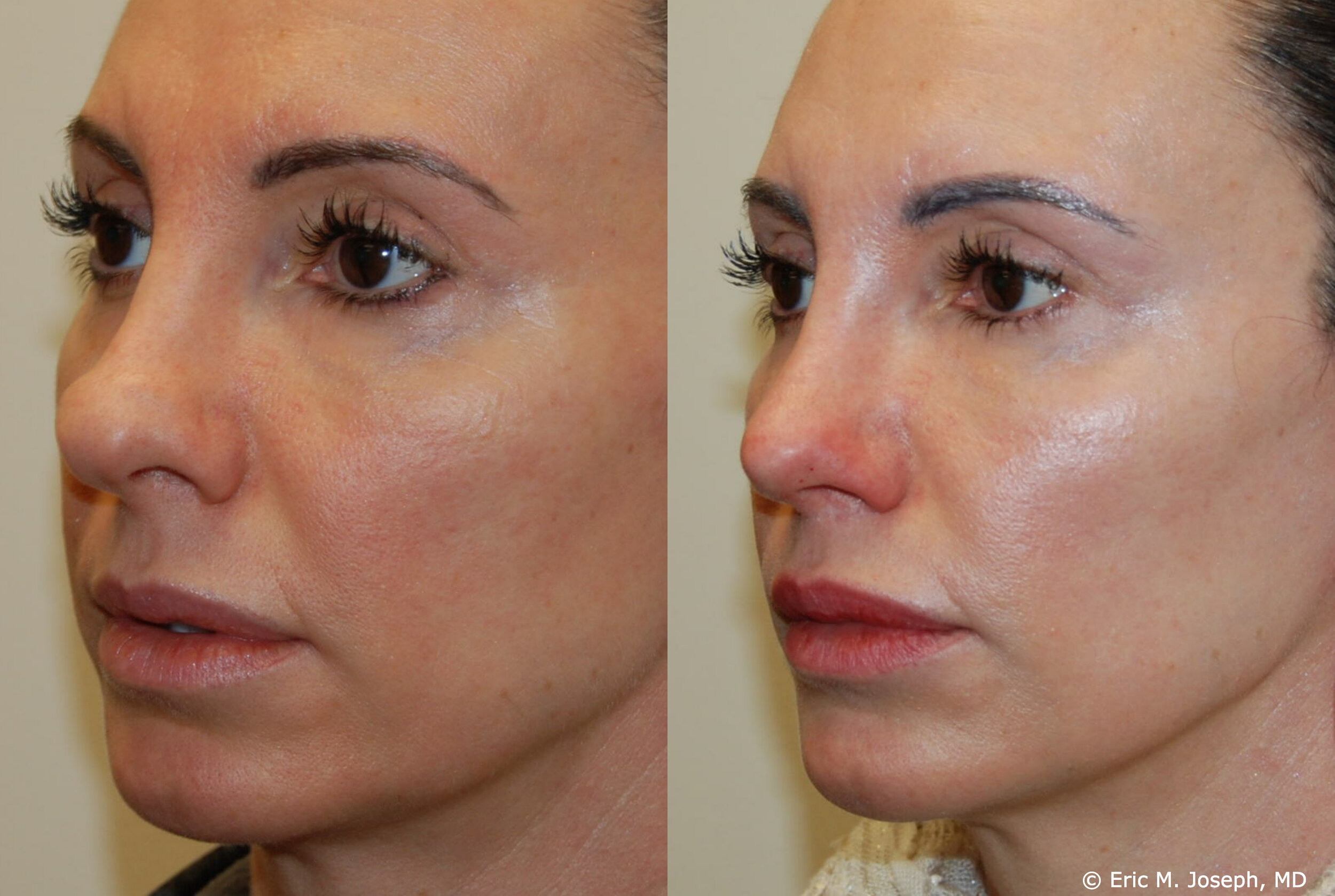
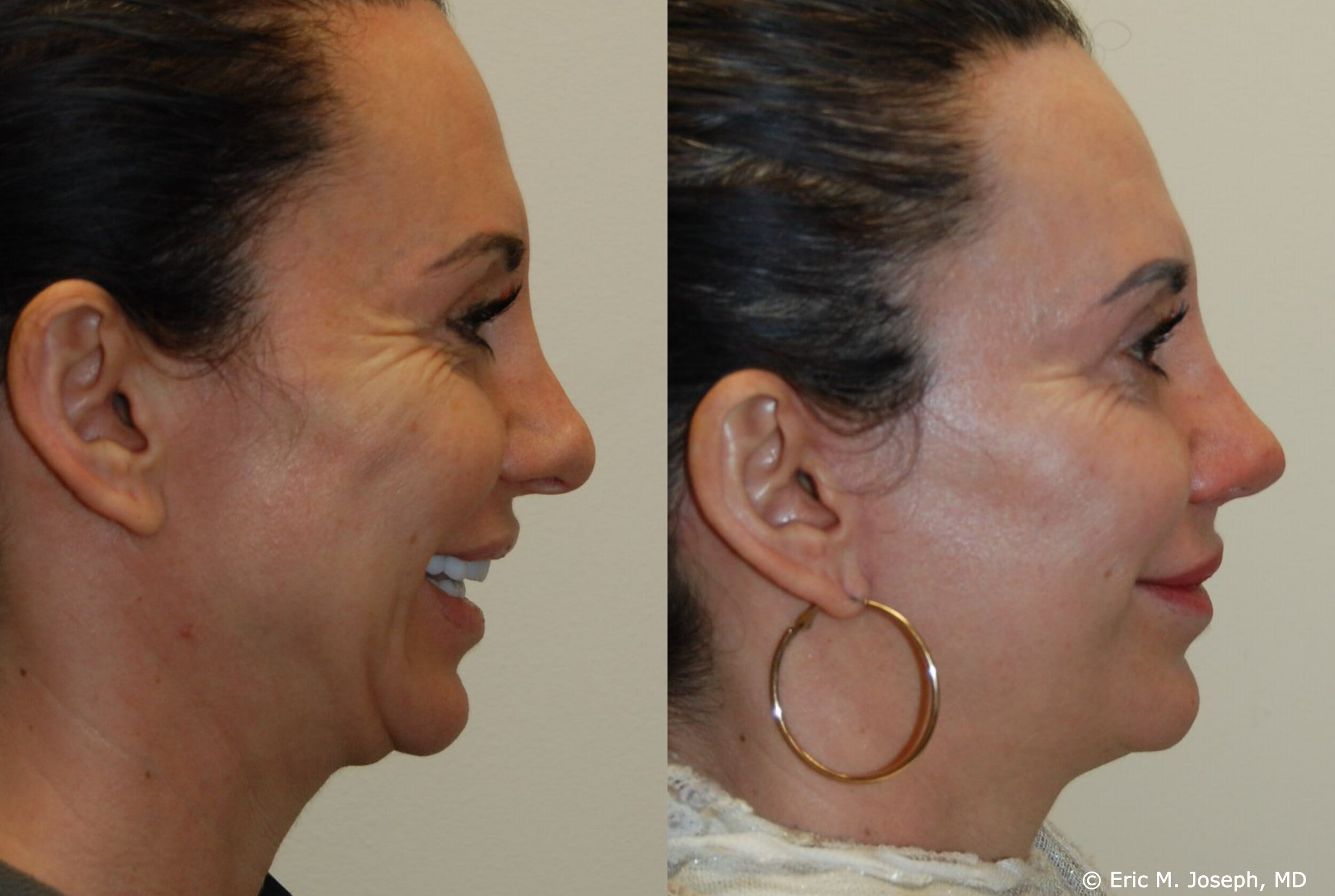
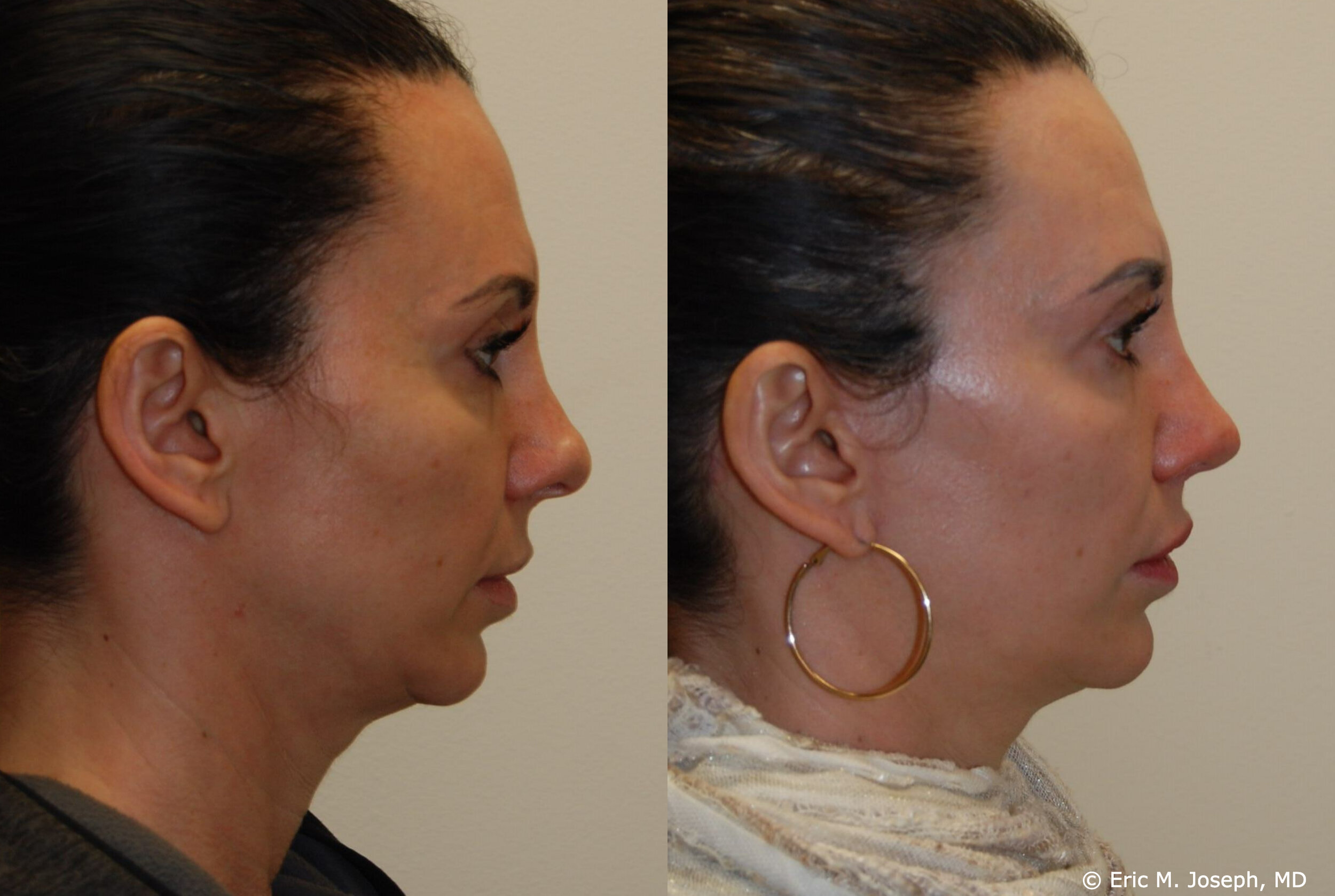
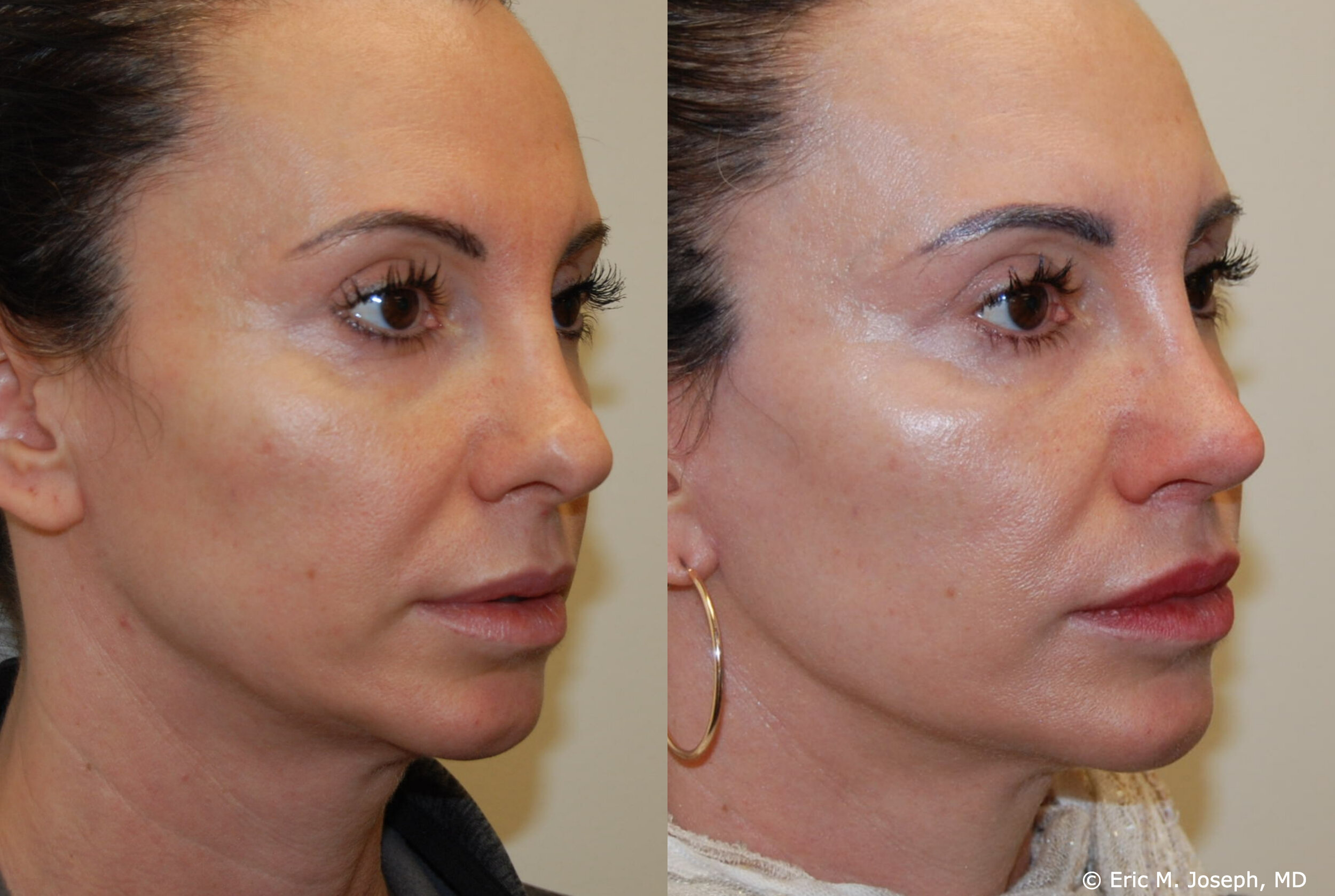
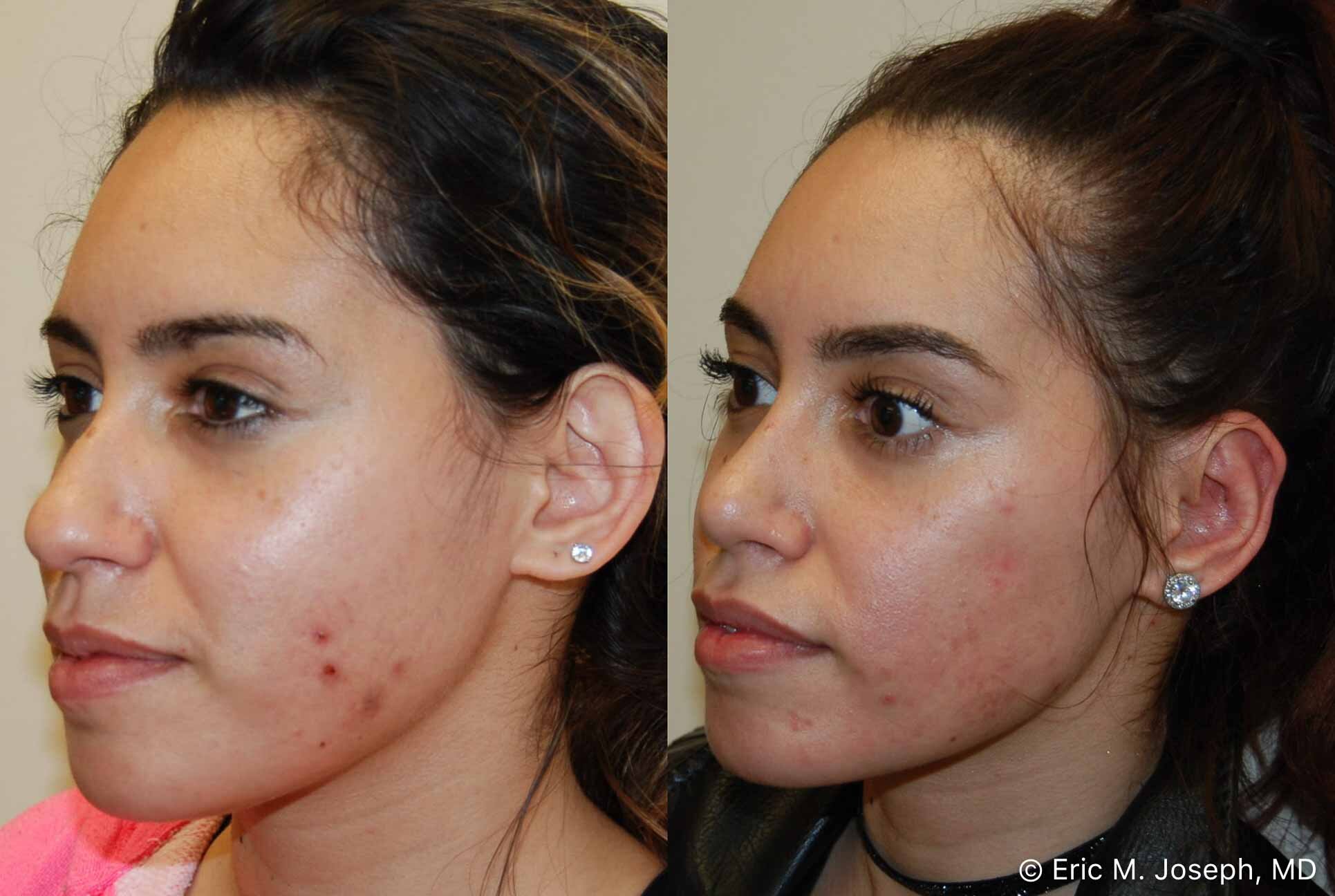
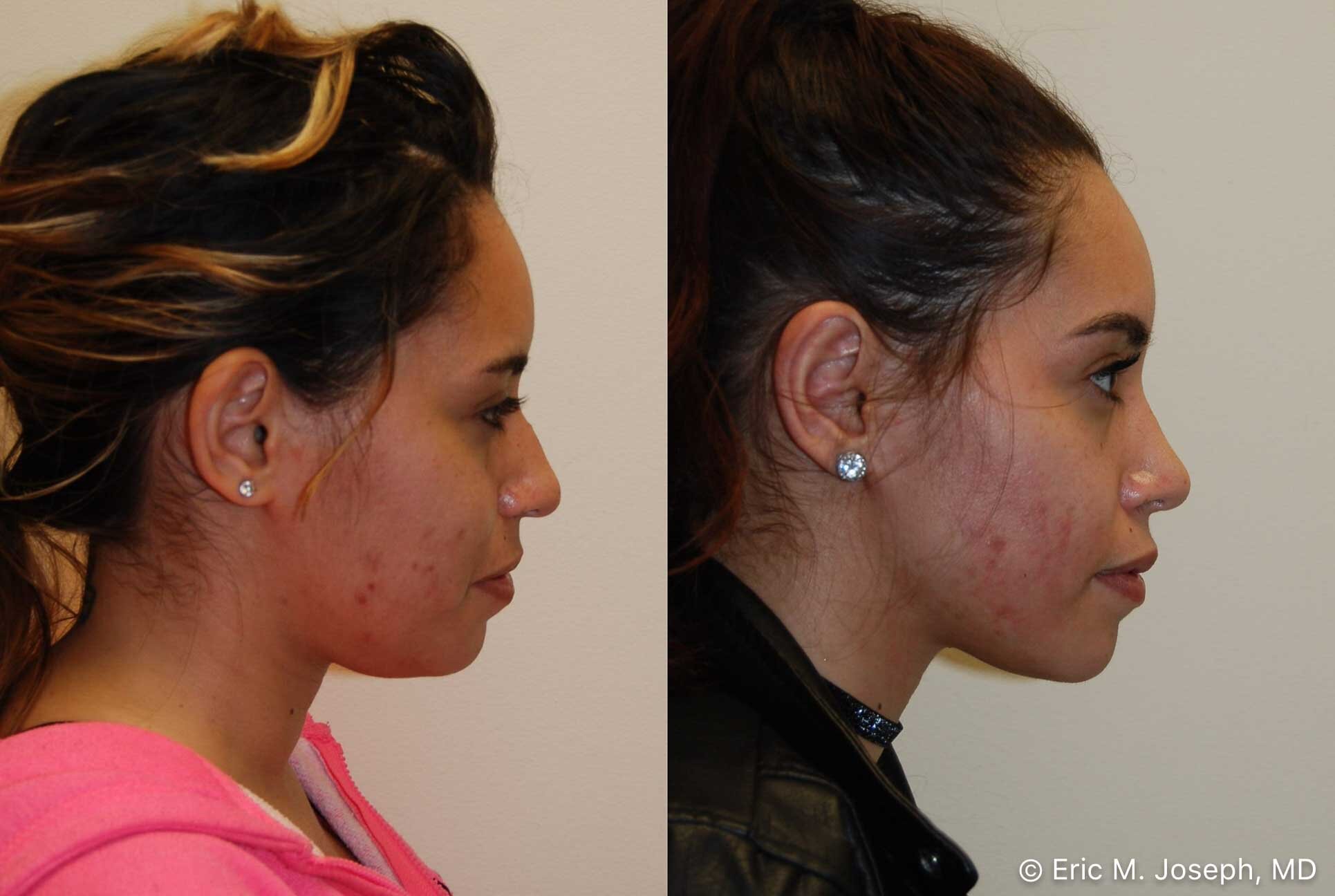
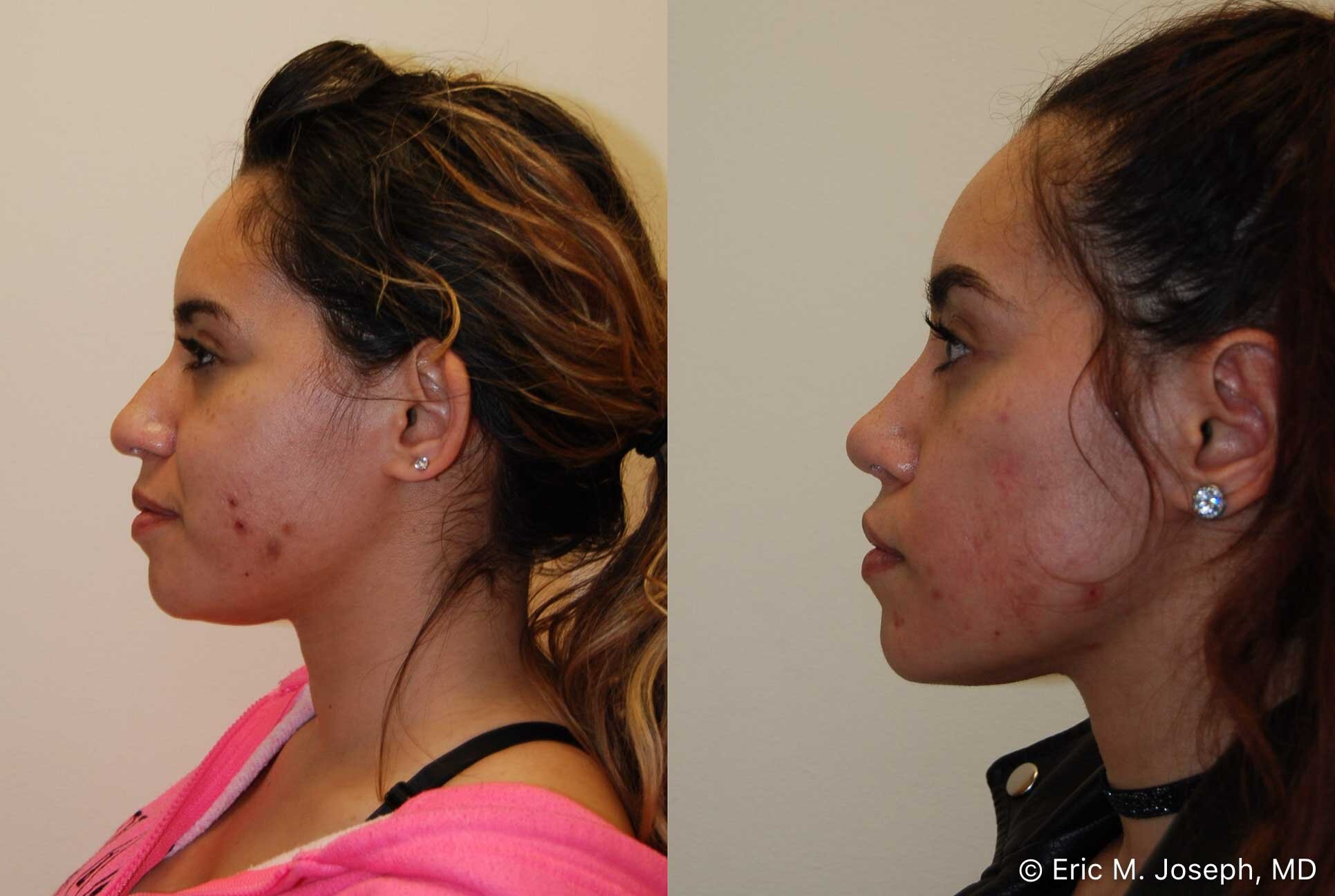
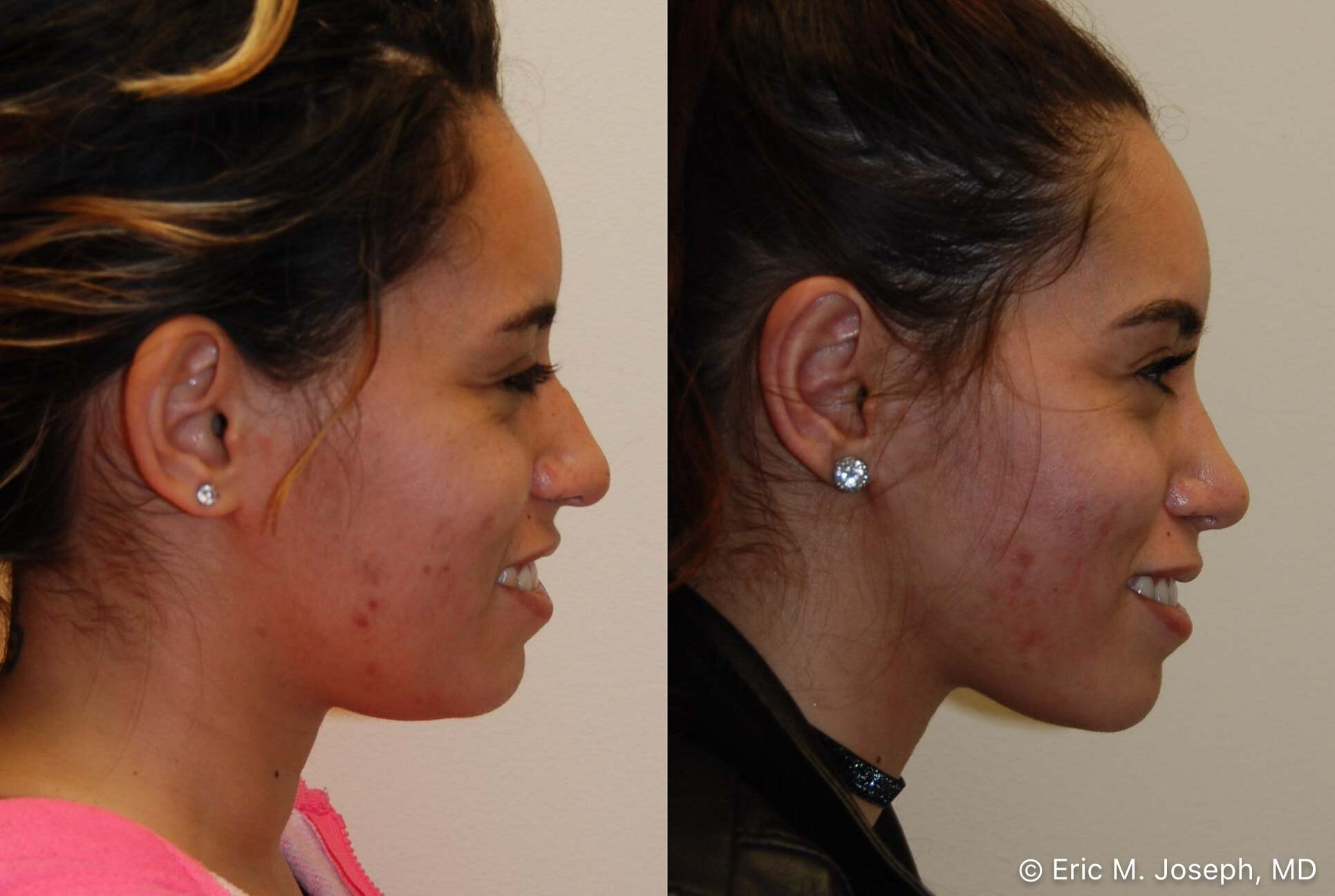
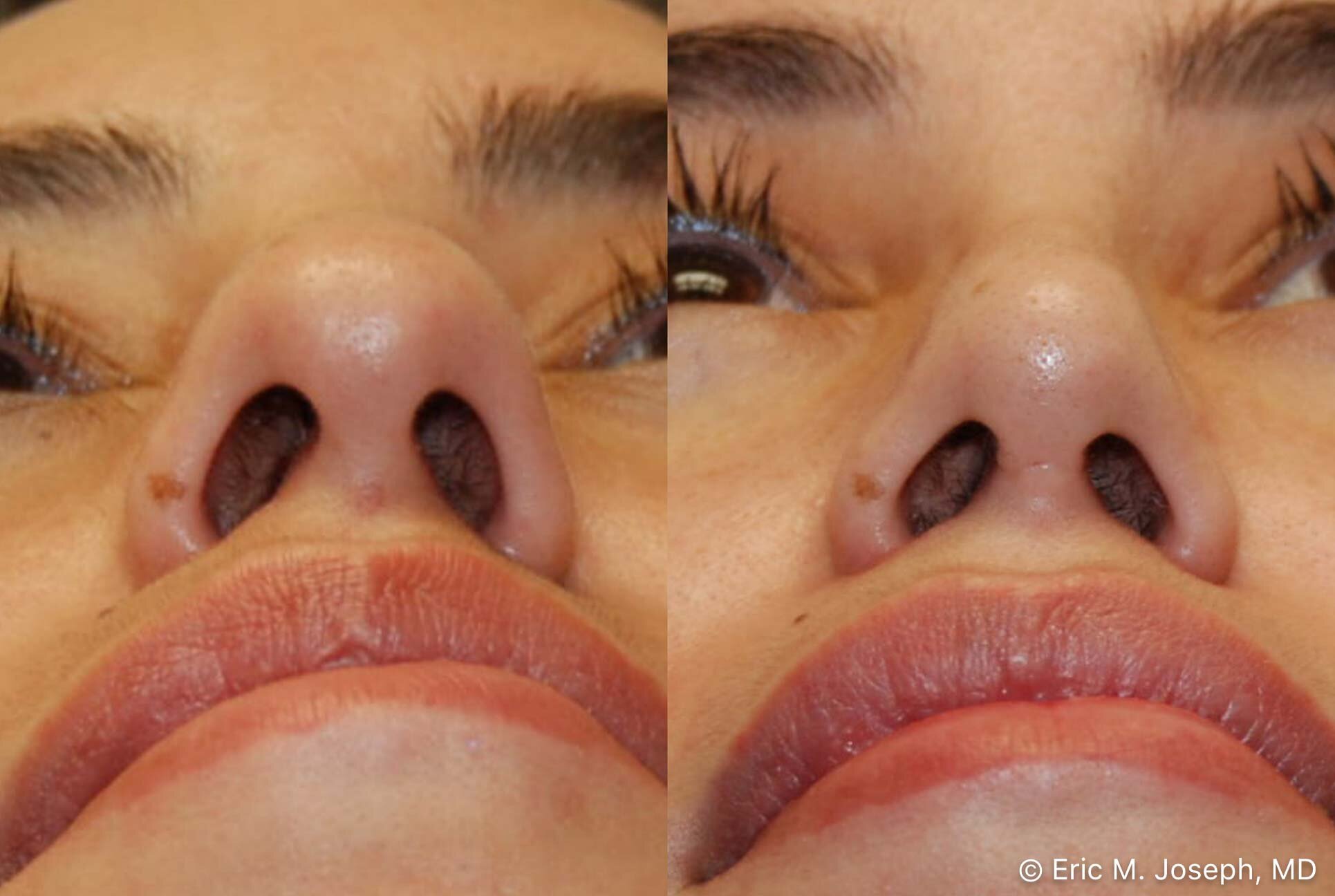
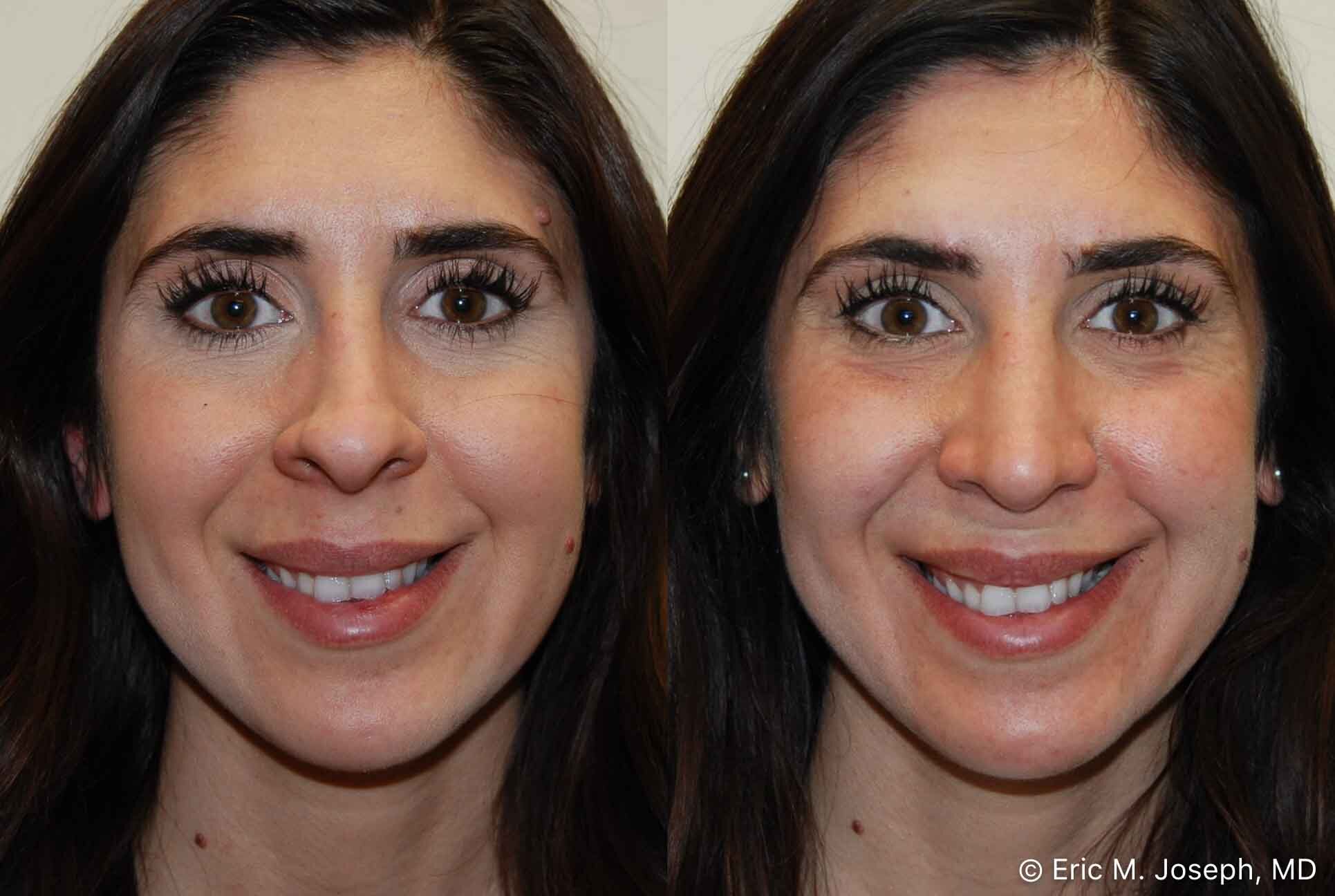
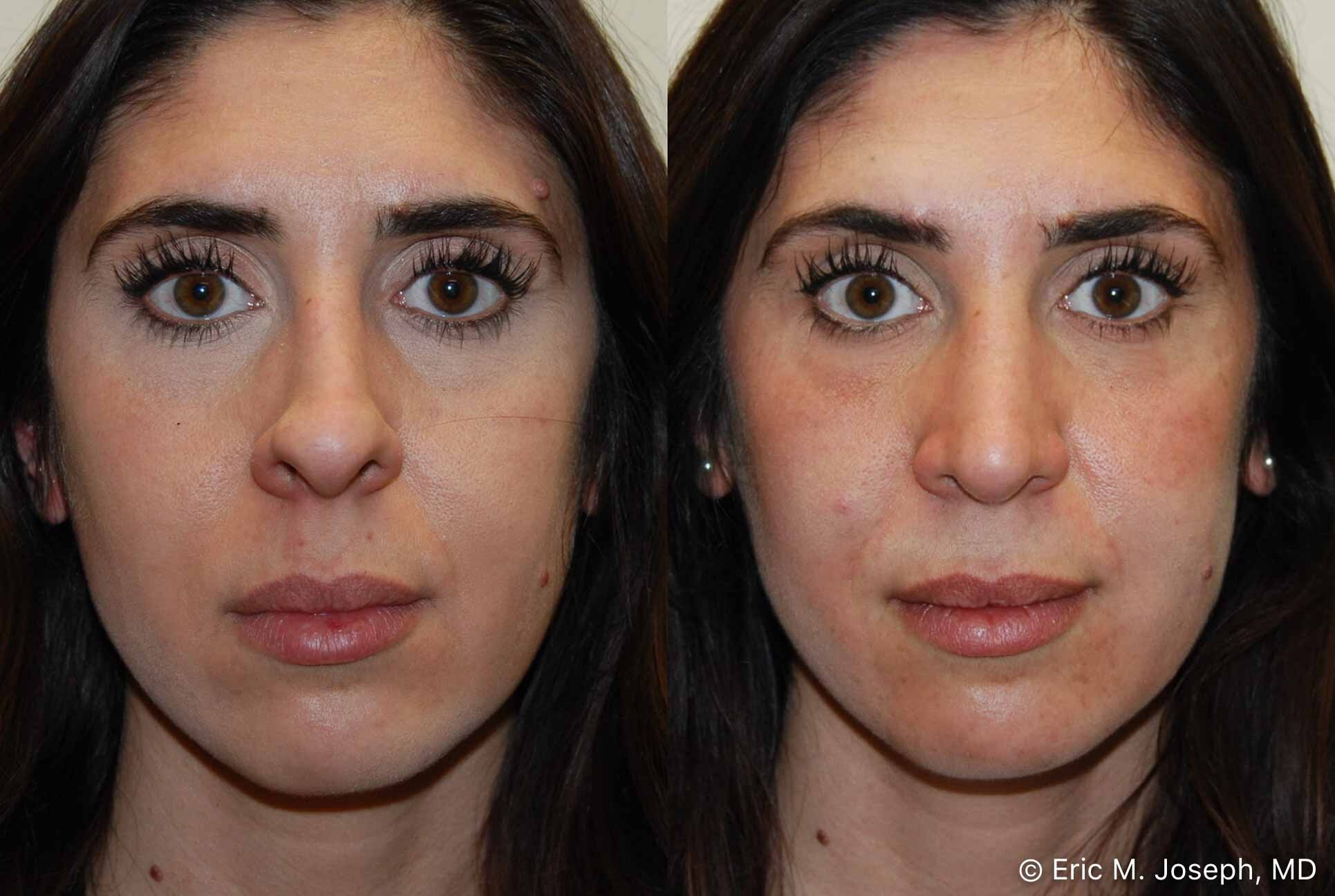
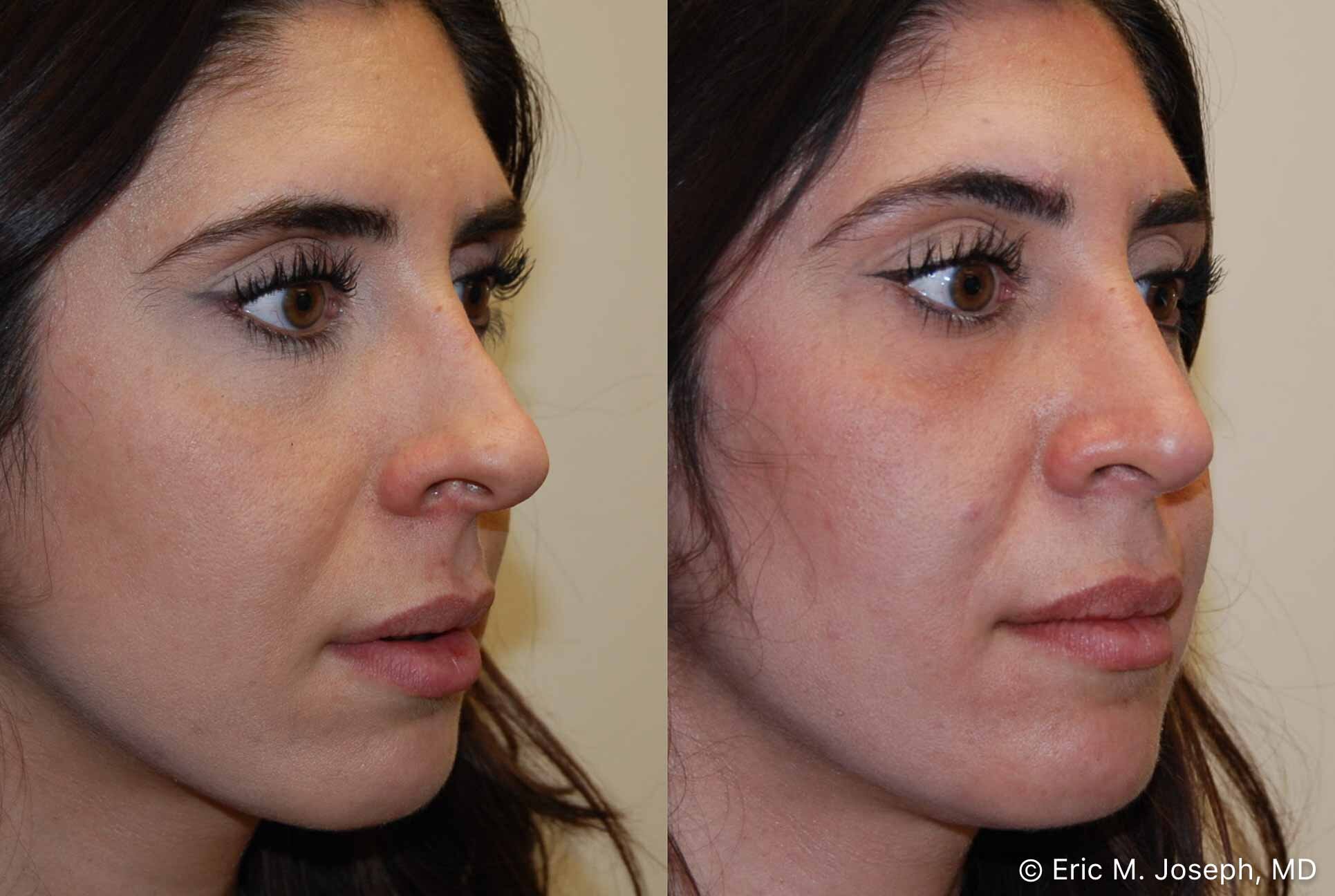
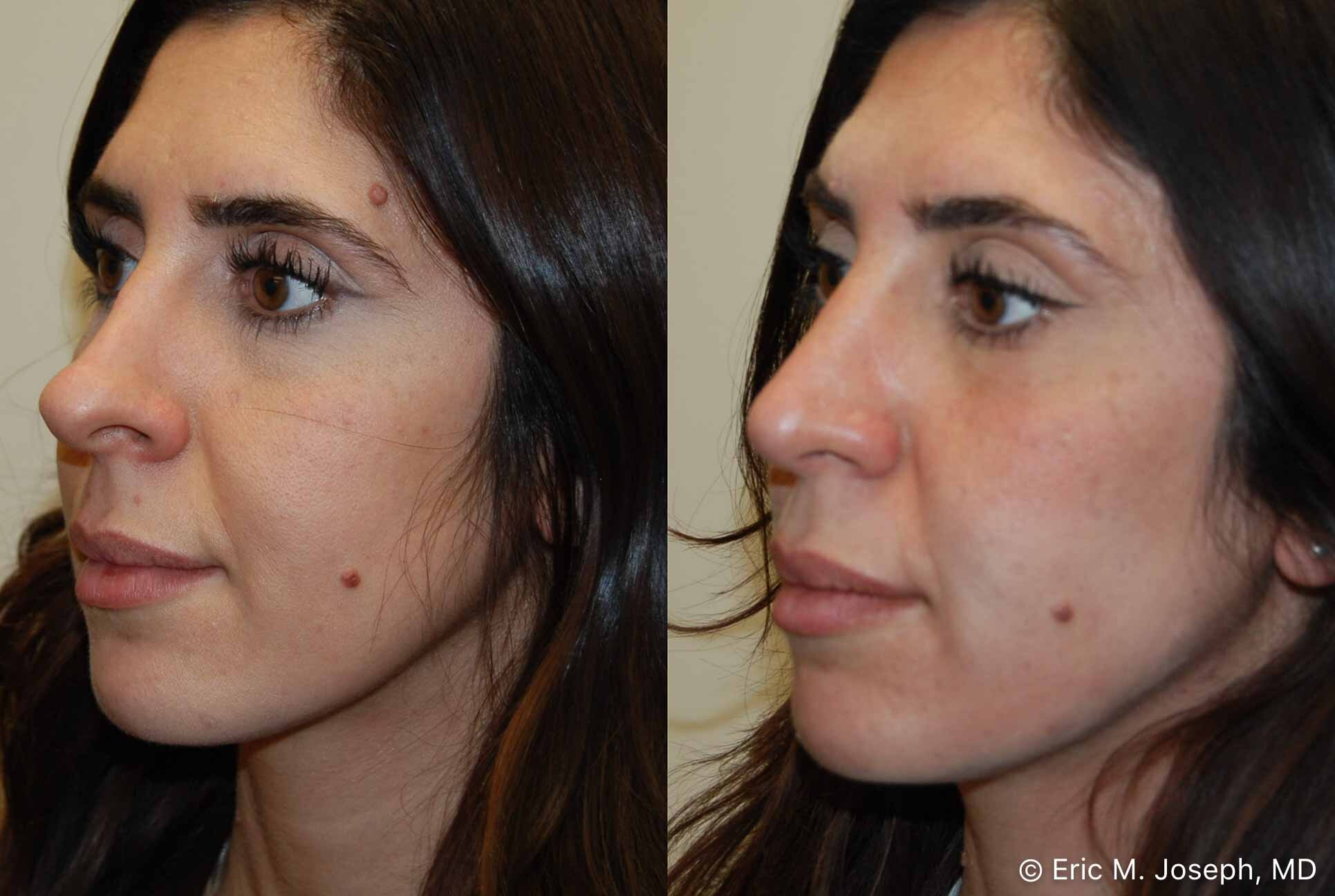
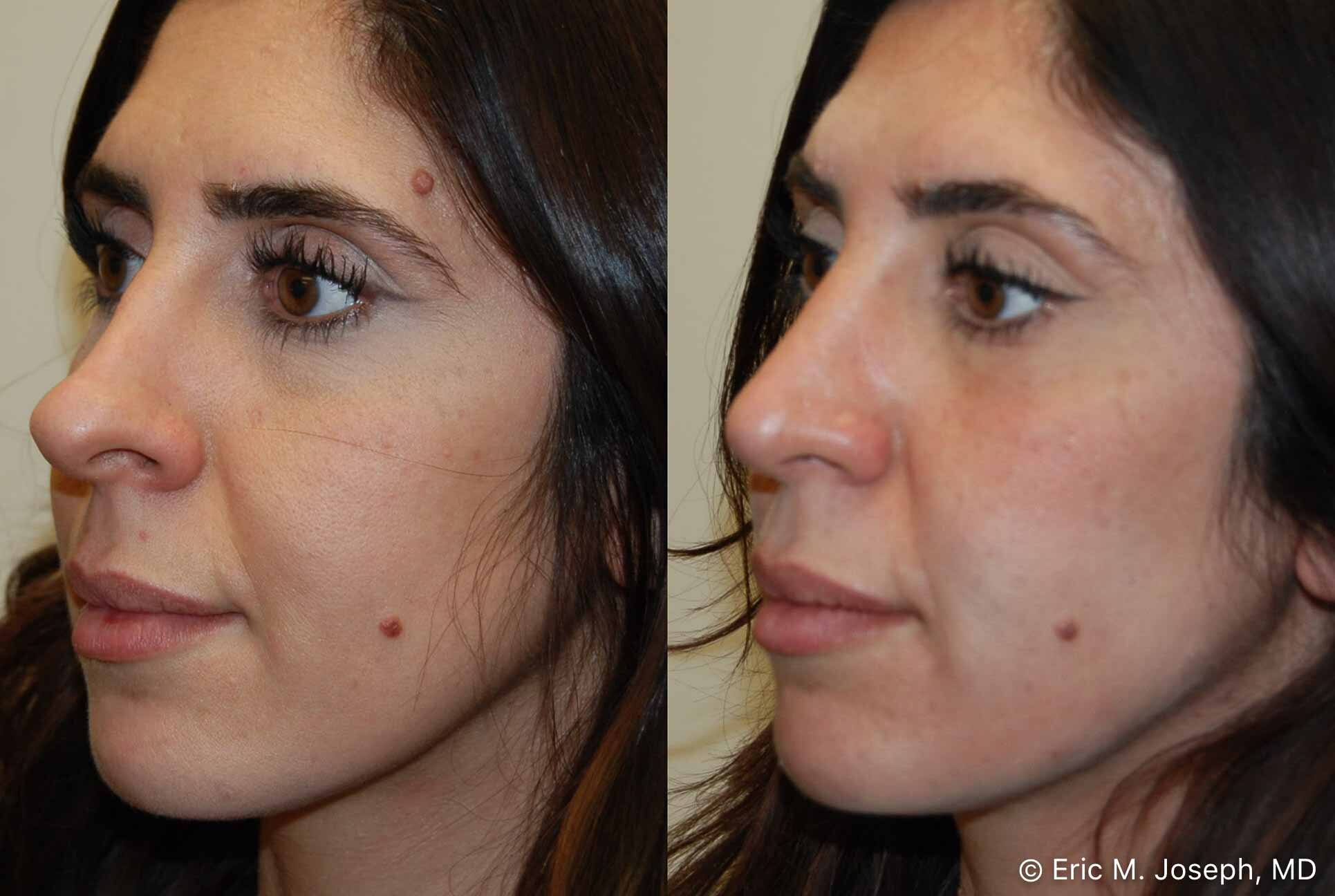
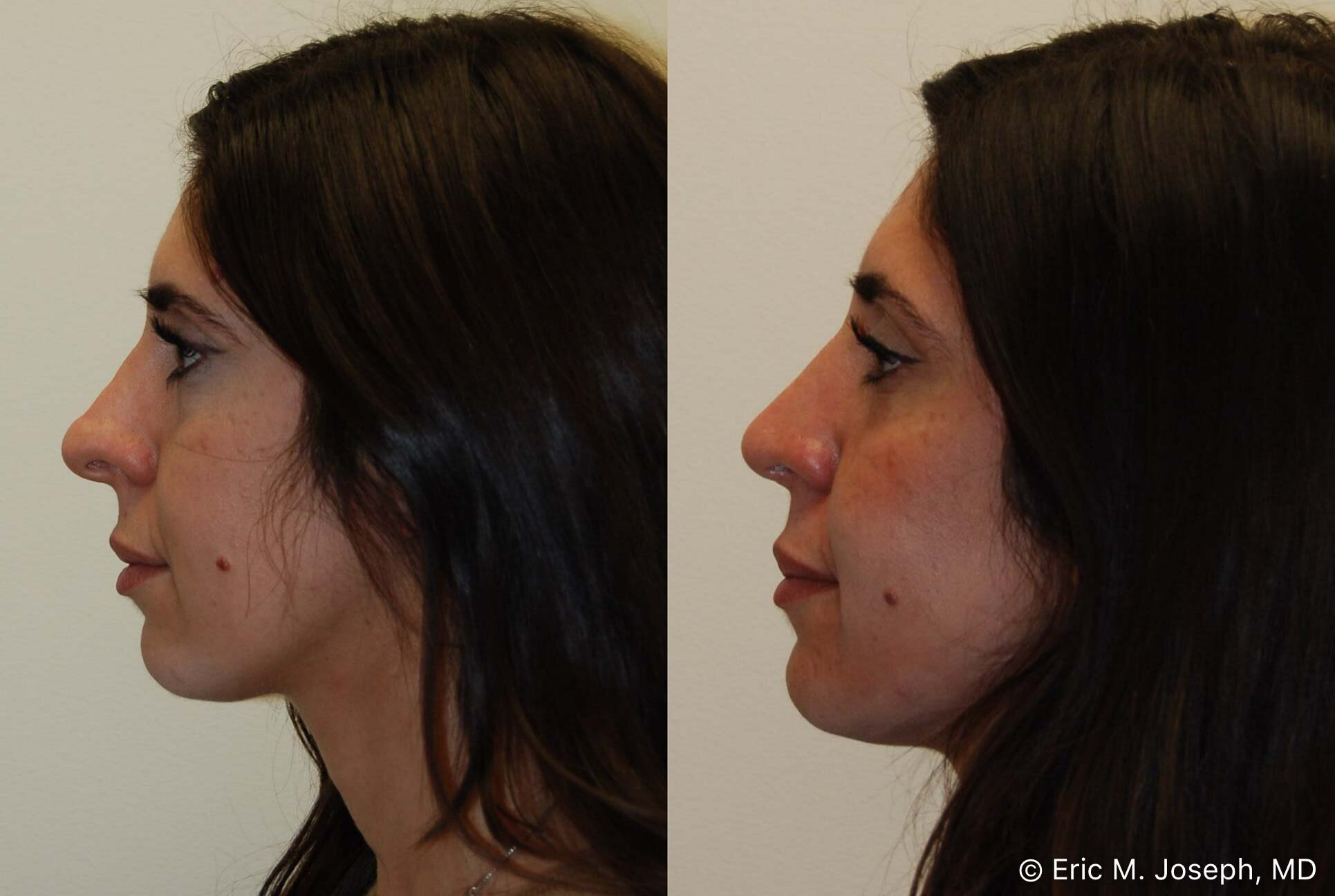
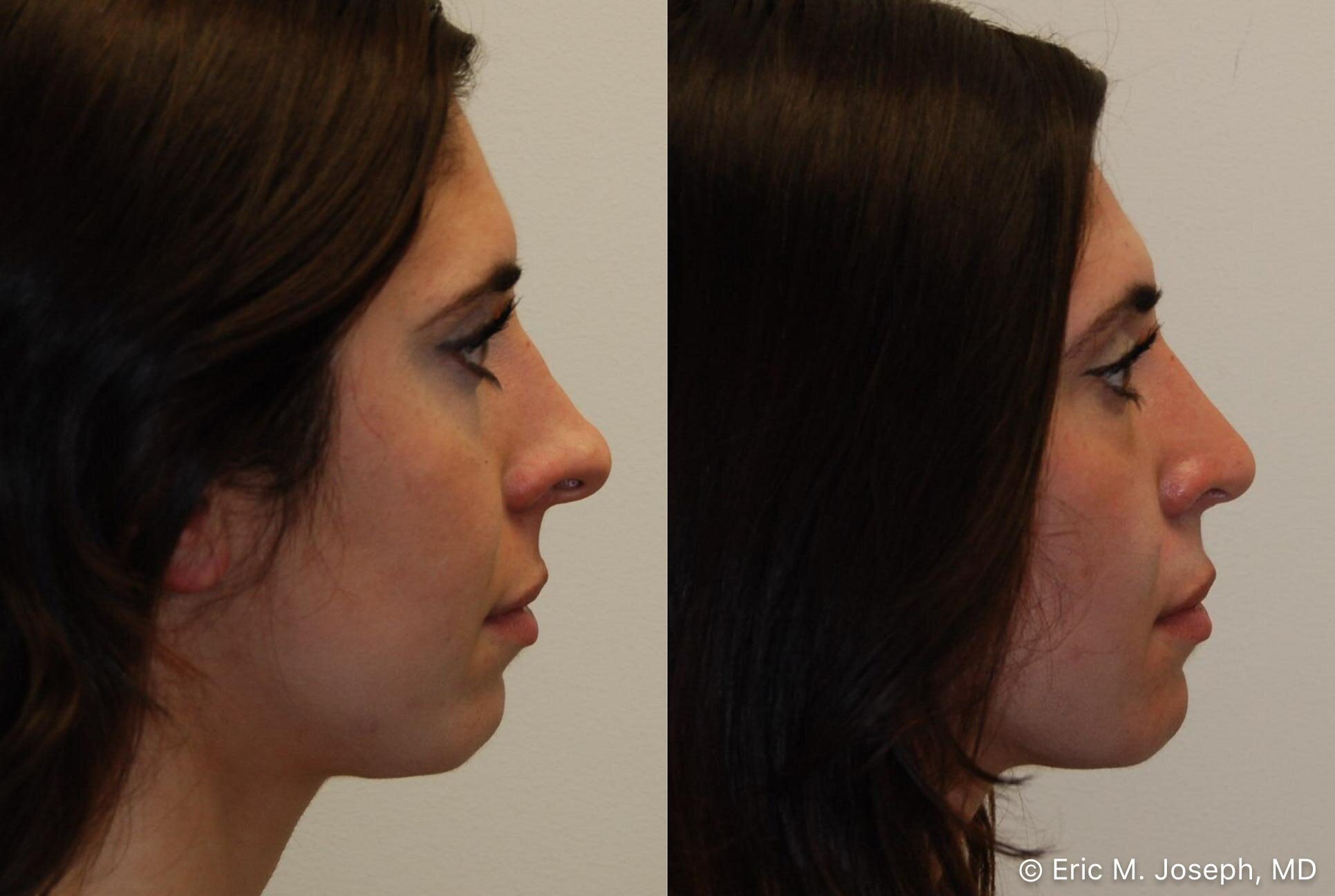
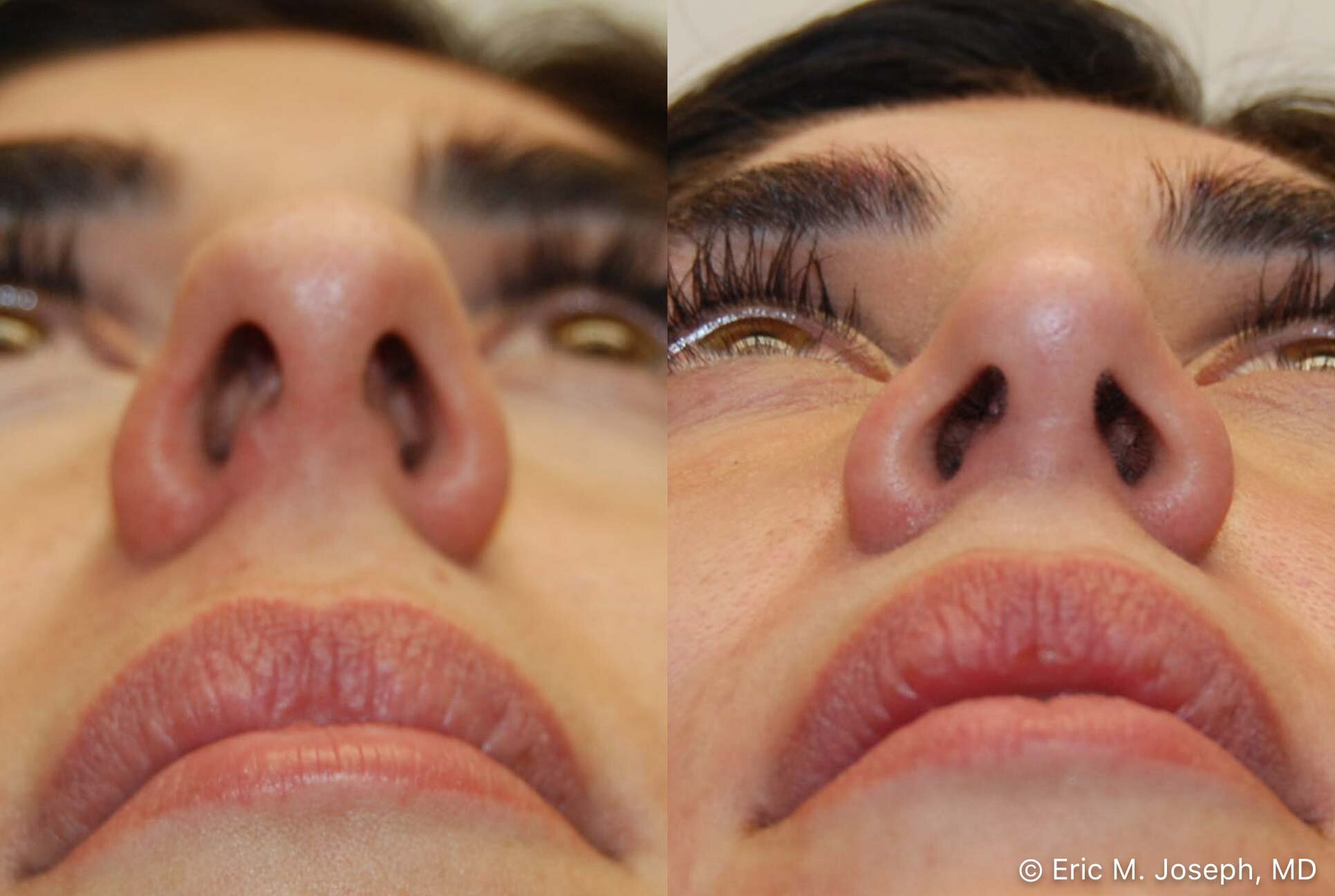
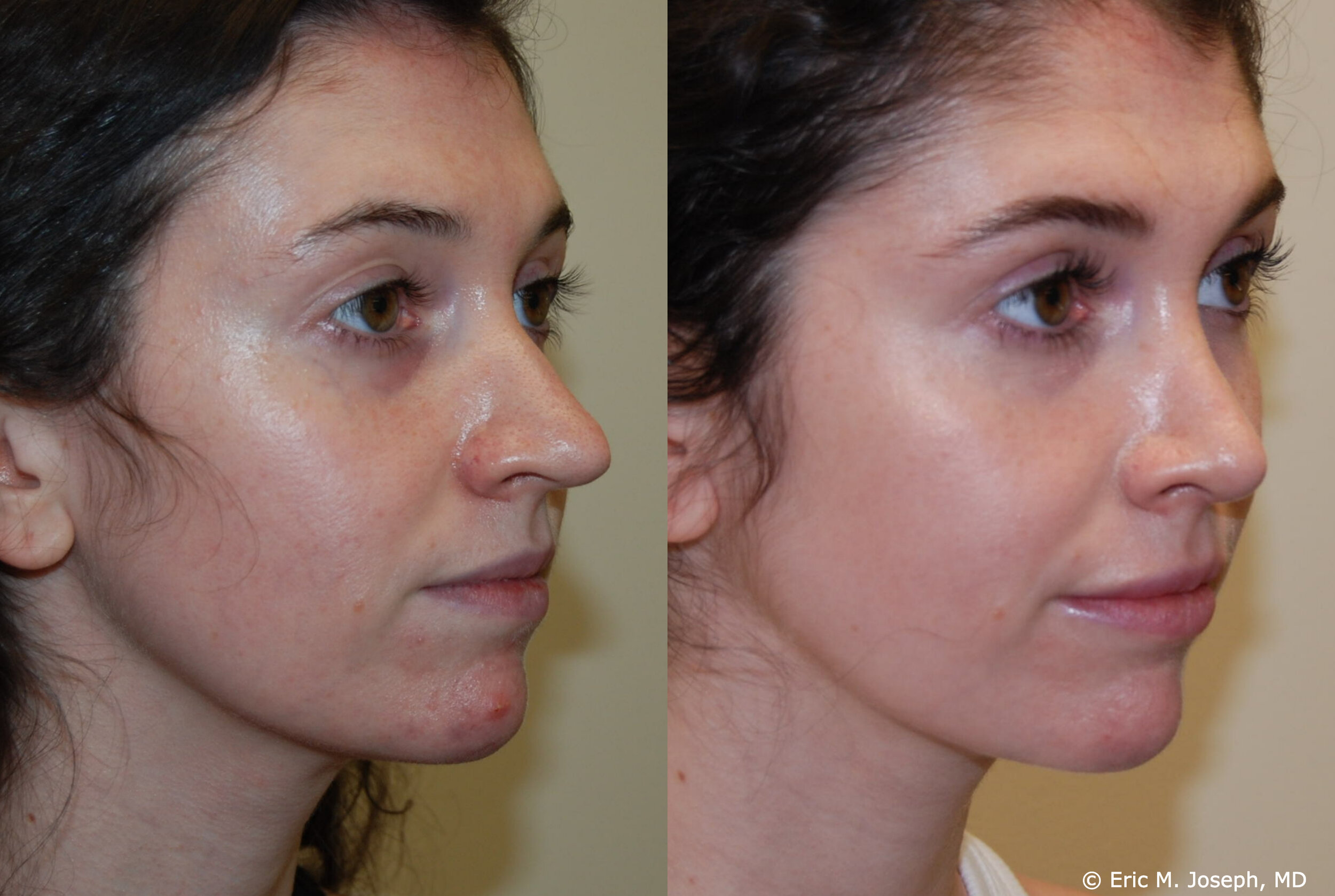
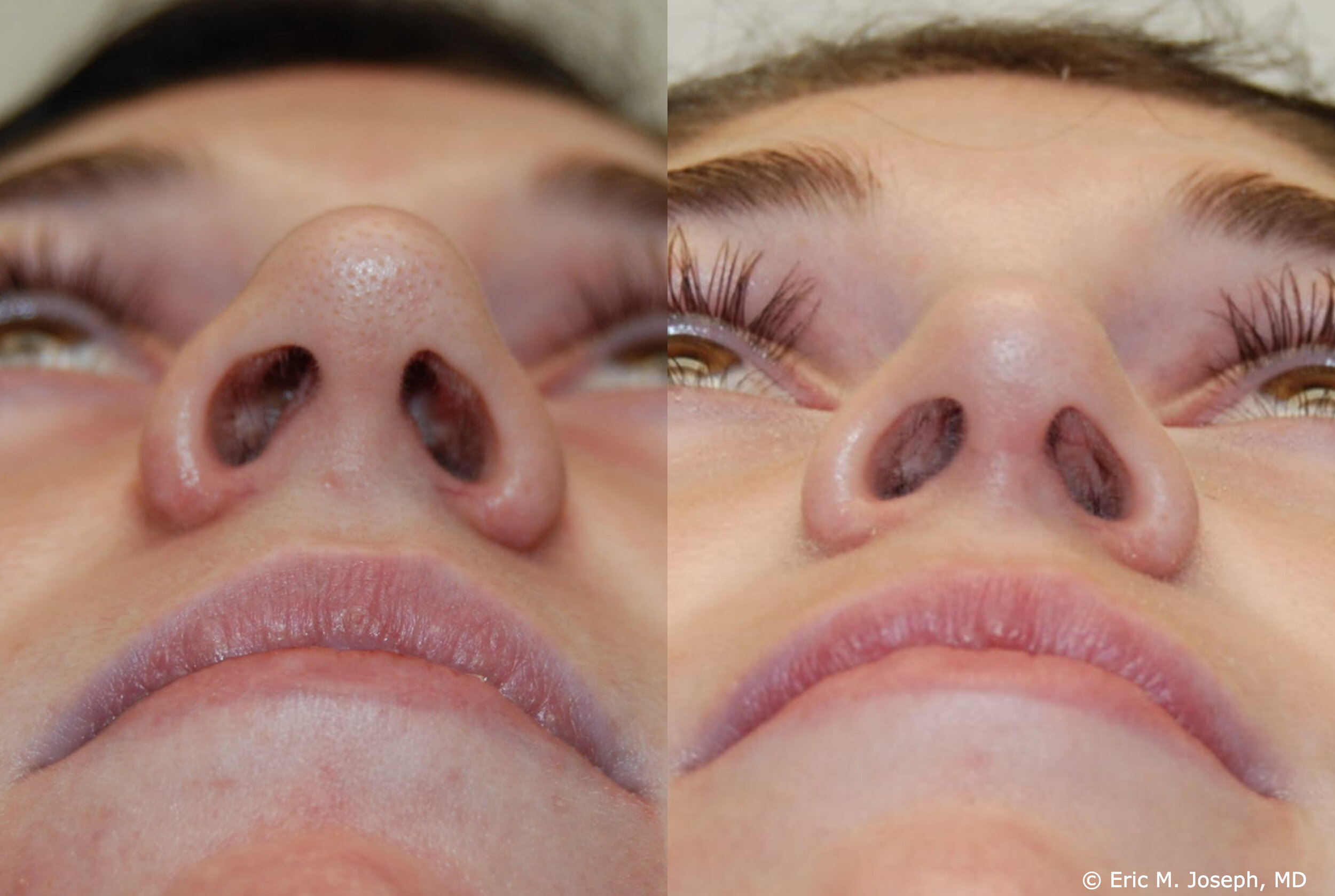
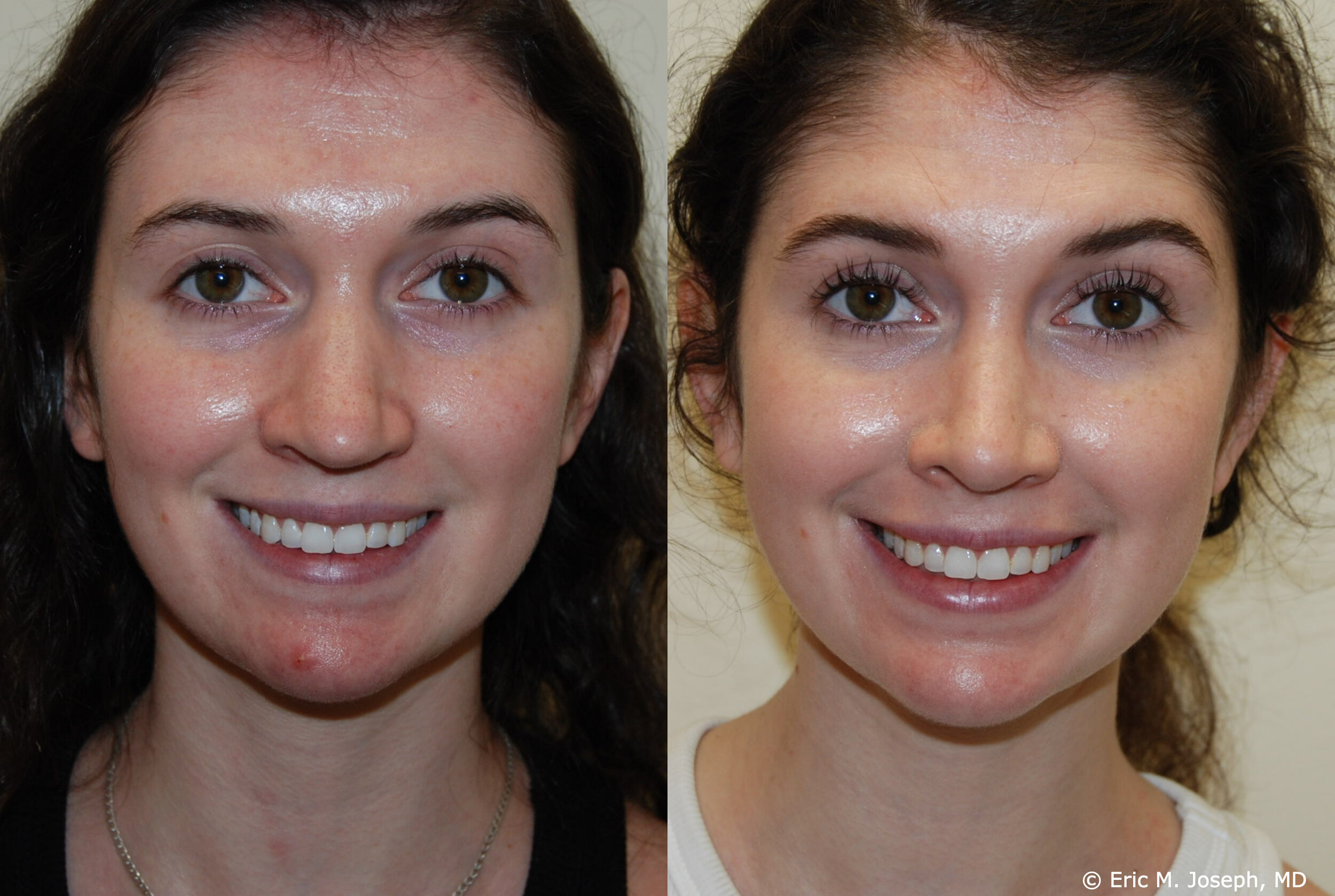
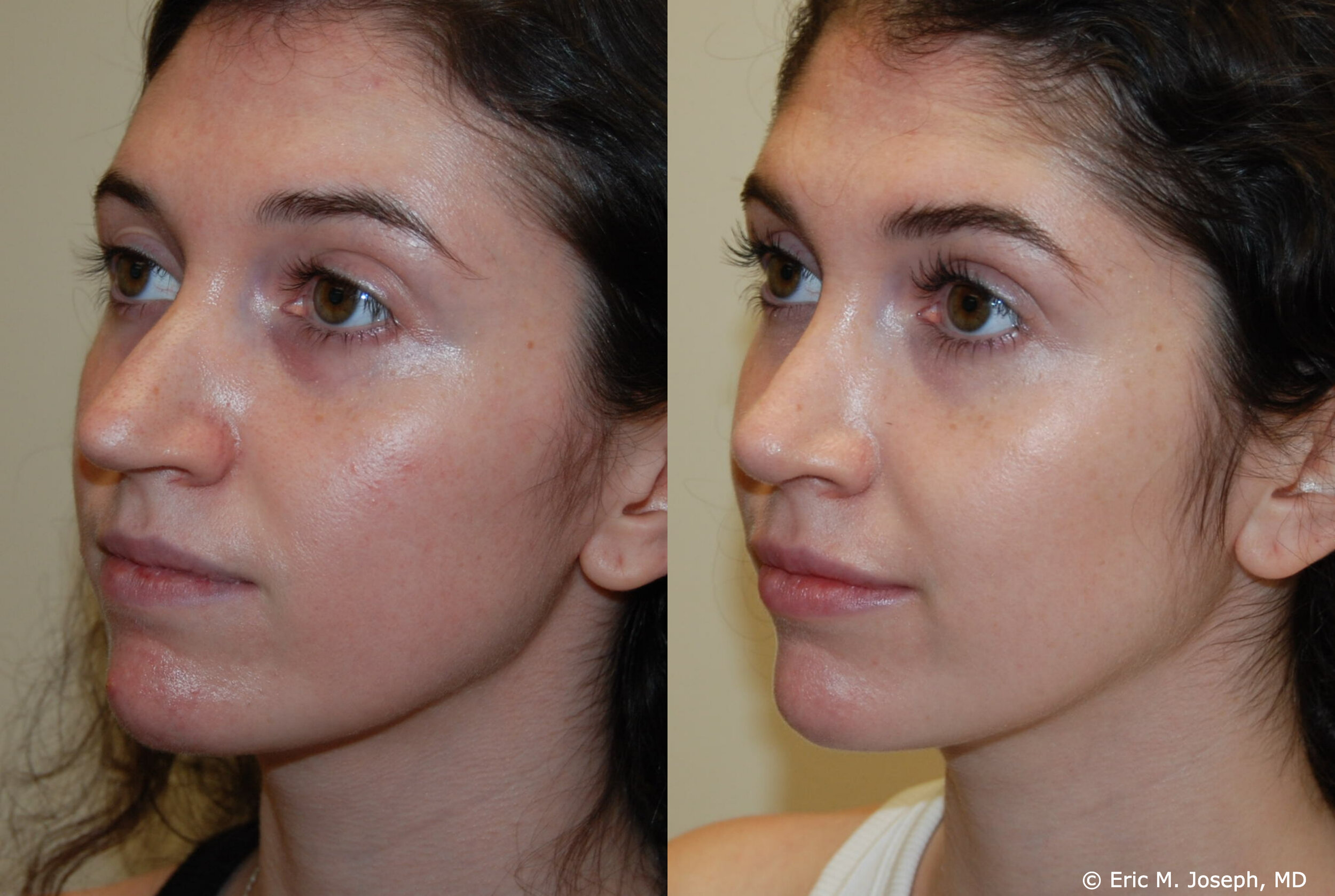
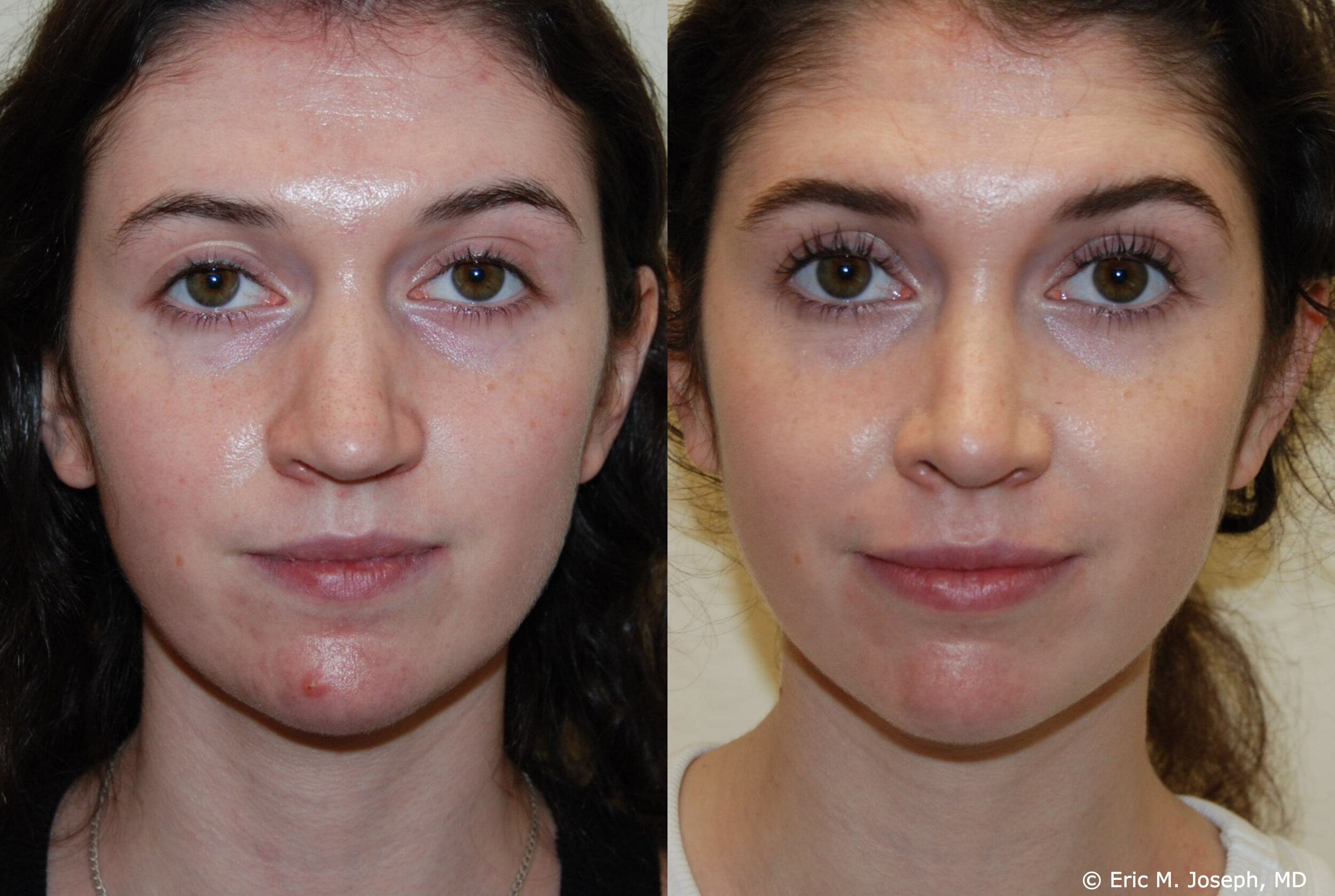
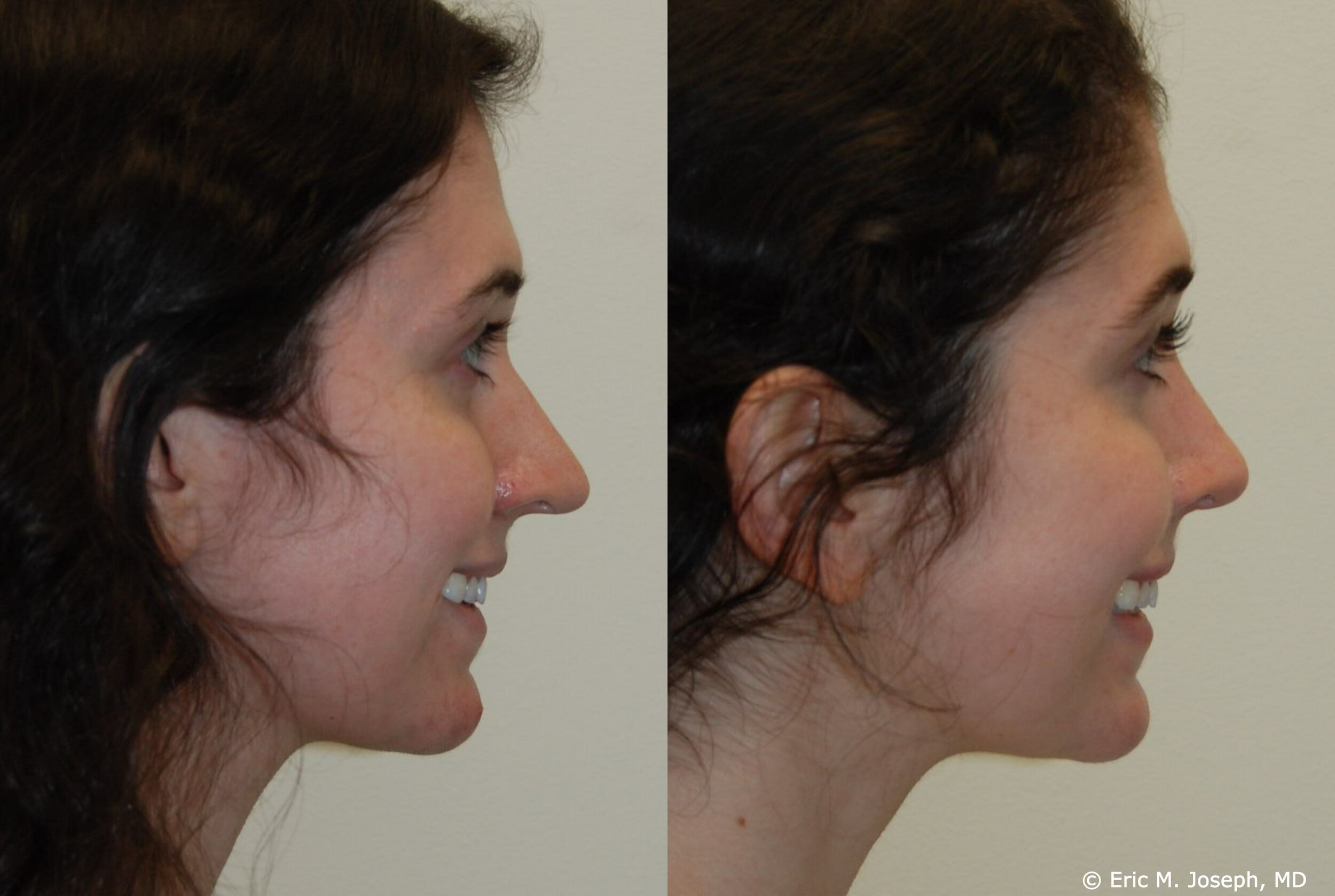
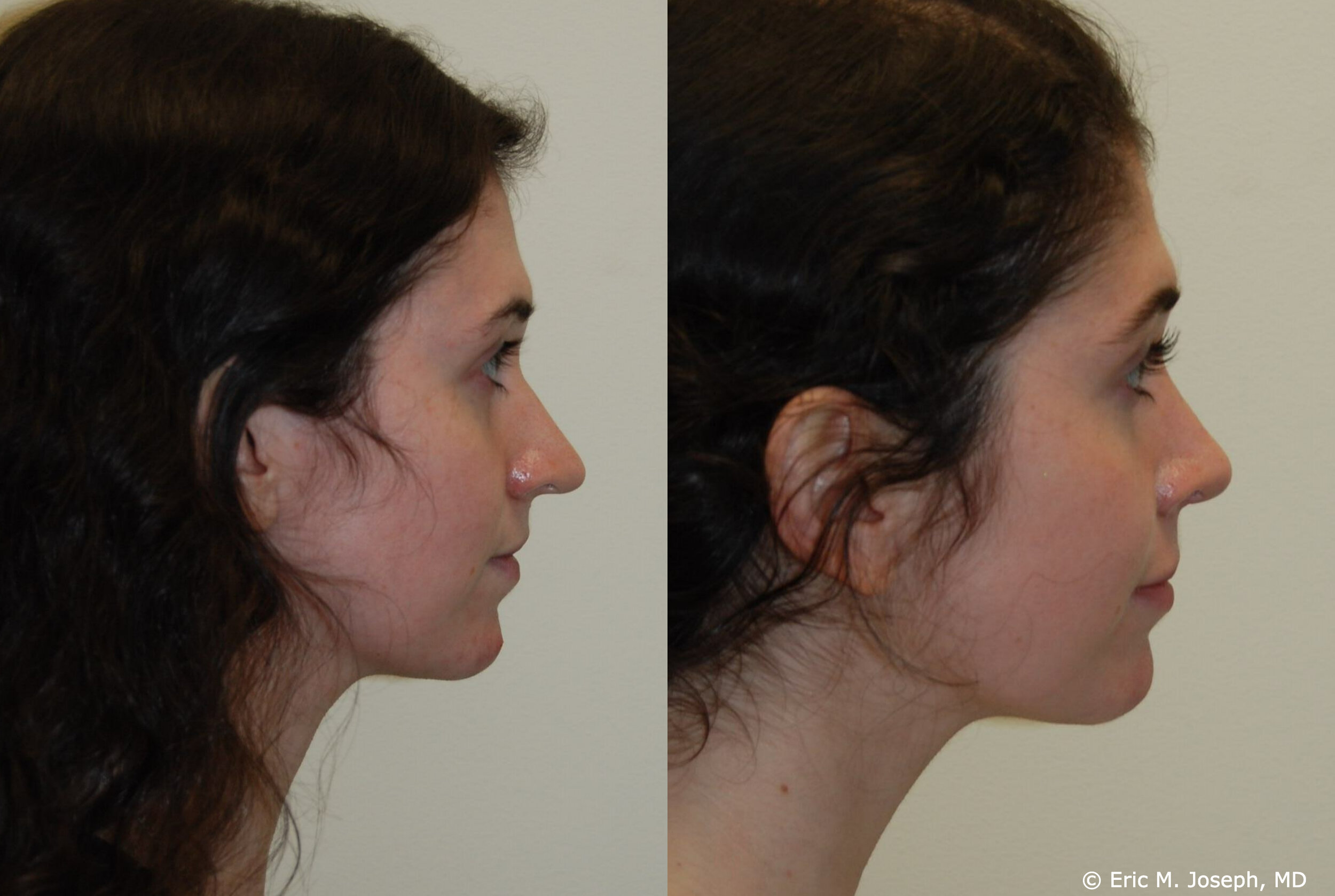
Our beautiful 23 year old patient is seen one year following functional and cosmetic revision rhinoplasty surgery. Her first surgeon removed a dorsal hump, but he failed to correct her wide, over-projected, and droopy nasal tip appearance. Her breathing became worse after her first rhinoplasty. Her repair consisted of tip de-projection, rotation and narrowing for a less distracting nasal appearance. Her breathing was improved by placing spreader grafts since her internal nasal valves were narrowed. We also reduced her turbinates to further improve her airway.

An over-projected nasal tip is one that sticks out too far. In our experience over 22 years, we cannot overemphasize the importance of dividing the lower lateral nasal tip cartilages to have maximal control of tip configuration. We treat the nasal tip as a tripod. Two of the tripod’s limbs are the right and left lateral crural tip cartilages, and the third limb is the sutured medial crural complex, typically with a columellar shoring strut graft. Dividing the tip cartilages may allow the greatest flexibility for reconstructing a nasal tip appearance to be pleasing and unoperated in appearance.
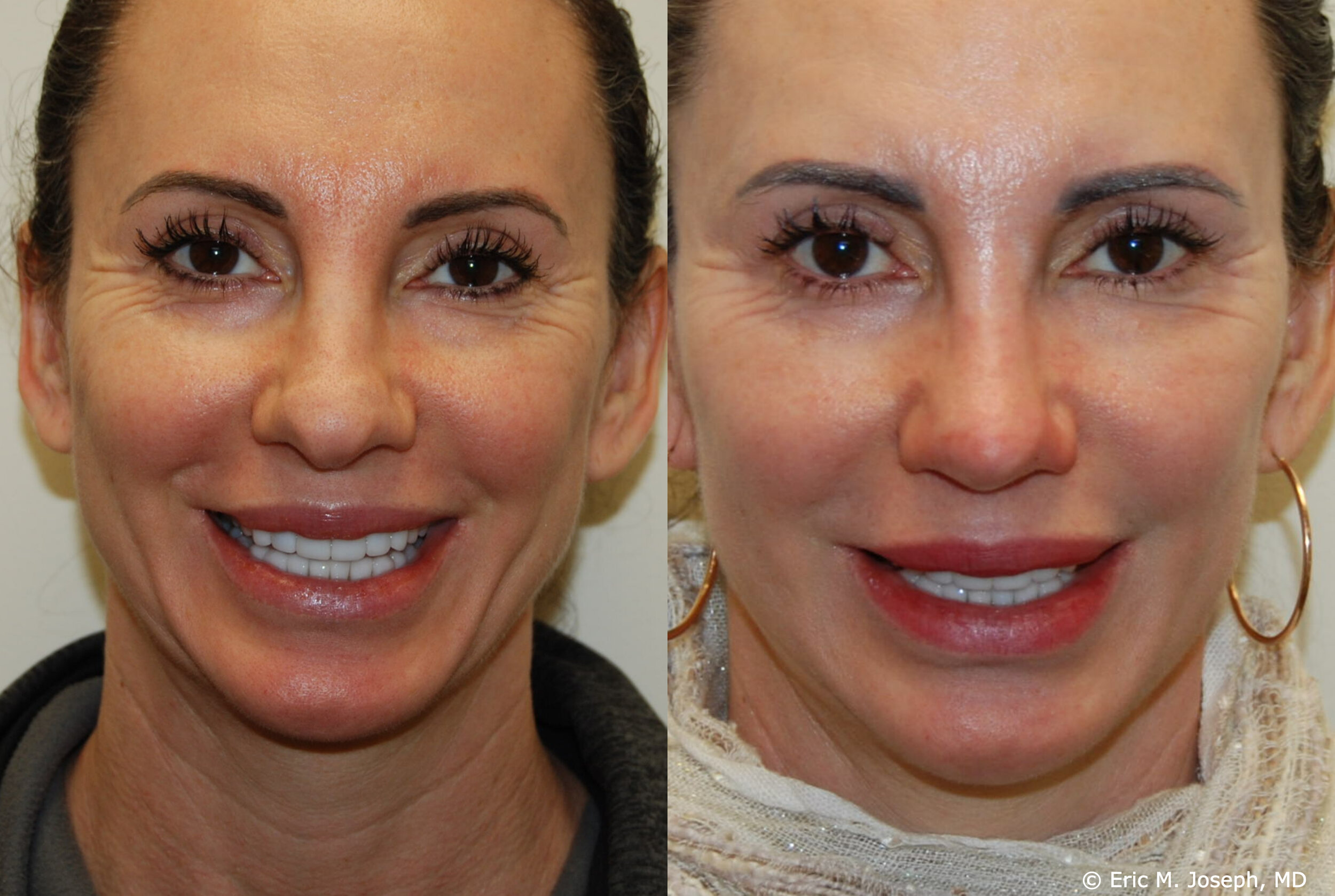
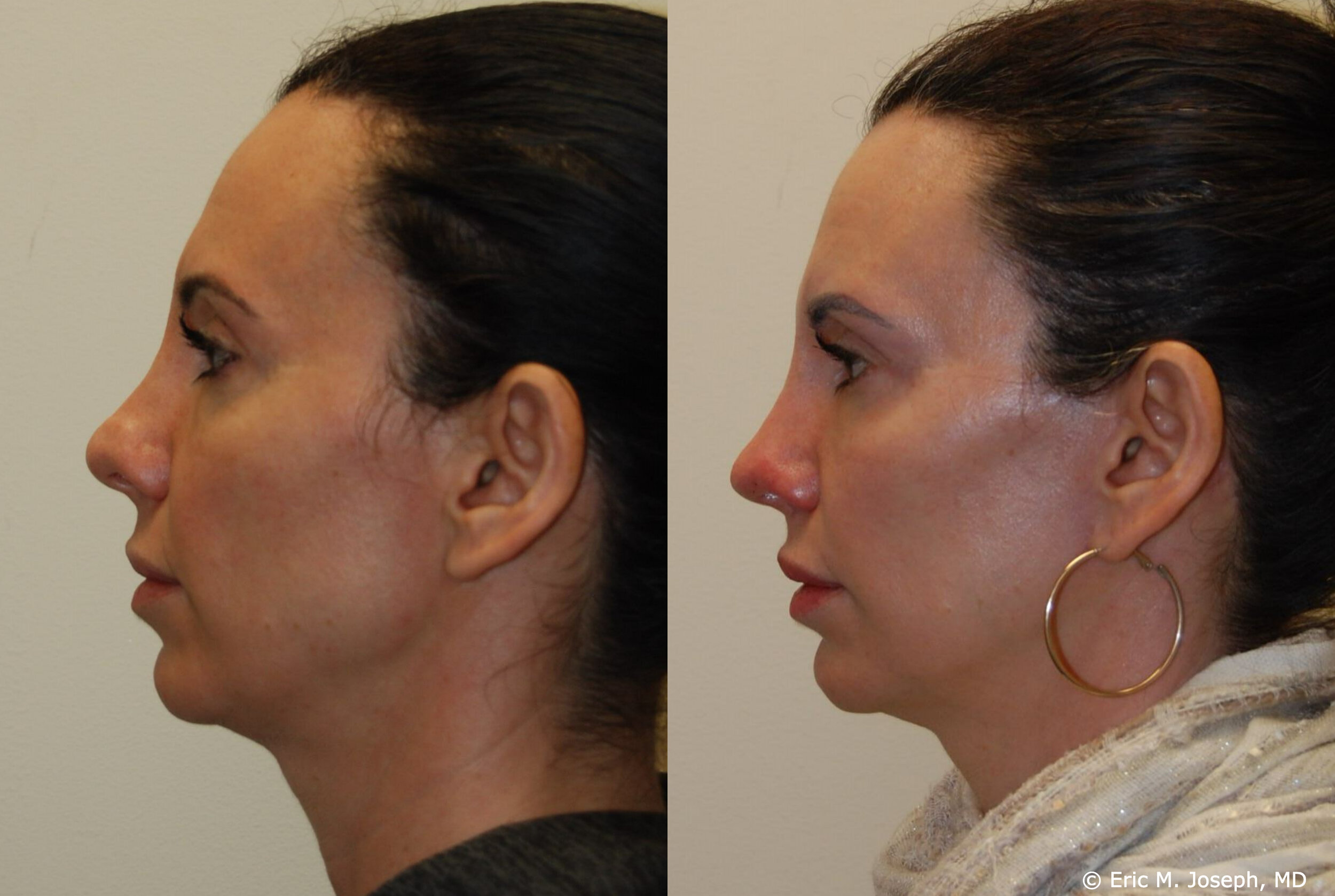
Revision Rhinoplasty Before & After: Total Tip Reconstruction

Revision Rhinoplasty #21

Our beautiful 44 year old patient is seen 16 months following tertiary revision rhinoplasty - that means after her third rhinoplasty. Her first two procedures were performed by another surgeon. Our patient had nasal obstruction and she was unhappy with her persistently wide nasal appearance and bulbous nasal tip appearance. During her surgery, it became clear that her previous surgeon removed too much tip cartilage. She required tailoring of her remaining tip cartilages, and total tip reconstruction with alar batten grafts. These are also called "lateral crural extension grafts" since they replace or strengthen the nasal tip while opening the external nasal valves. Our patient also required repair of her "poly-beak", which is an excessively high dorsal septum above her tip. The top of her nasal bones were rasped, and osteotomies were performed to achieve narrowing of the upper 2/3 of her nose. She additionally required cartilage spreader grafts on both sides to reconstruct her internal nasal valves. You can see a natural looking nasal appearance that breathes better.

A prospective revision rhinoplasty patient should be carefully evaluated in-person for candidacy. The results of revision rhinoplasty surgery will be the centerpiece of our patient’s face. The esthetic endpoint of successful surgery is to allow our patient’s nose to blend in, and become less distracting—not to transform the centerpiece into a masterpiece. Our patients must accept that the goal of revision rhinoplasty surgery is improvement, not perfection. Your revision rhinoplasty consultation is the first, and best time to determine whether your goals may be achieved through additional surgery. During the consultation we determine, to the best of our ability, that if all goes as planned, our patients will be pleased with the outcome of revision rhinoplasty. We may observe while taking a history, that revision rhinoplasty may be suitable from an esthetic standpoint, but careful listening, questioning, examining, and computer imaging may be necessary to ensure that our patients have realistic goals and expectations.

Revision Rhinoplasty Before & After: Dorsal Hump Removed

Revision Rhinoplasty #20

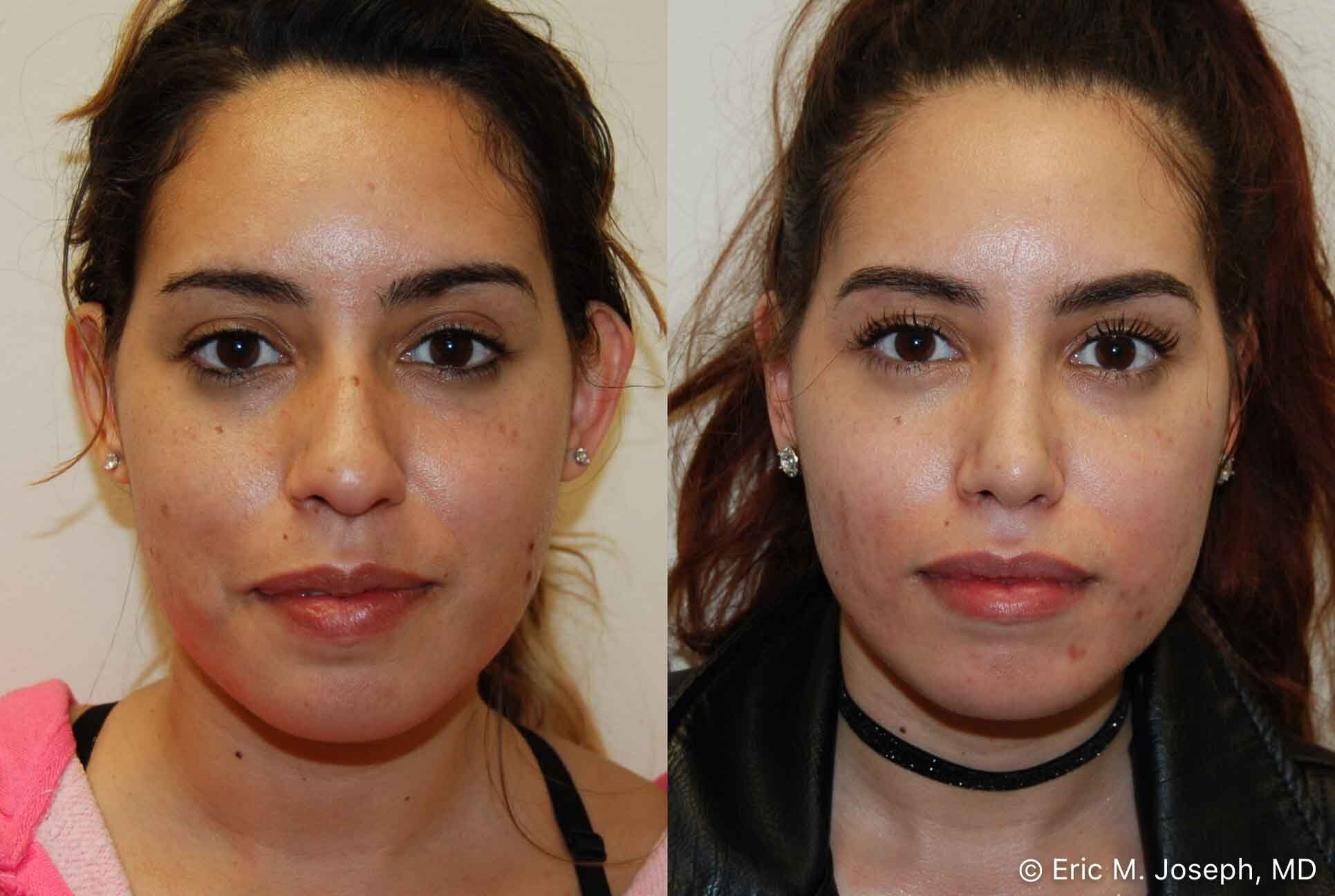
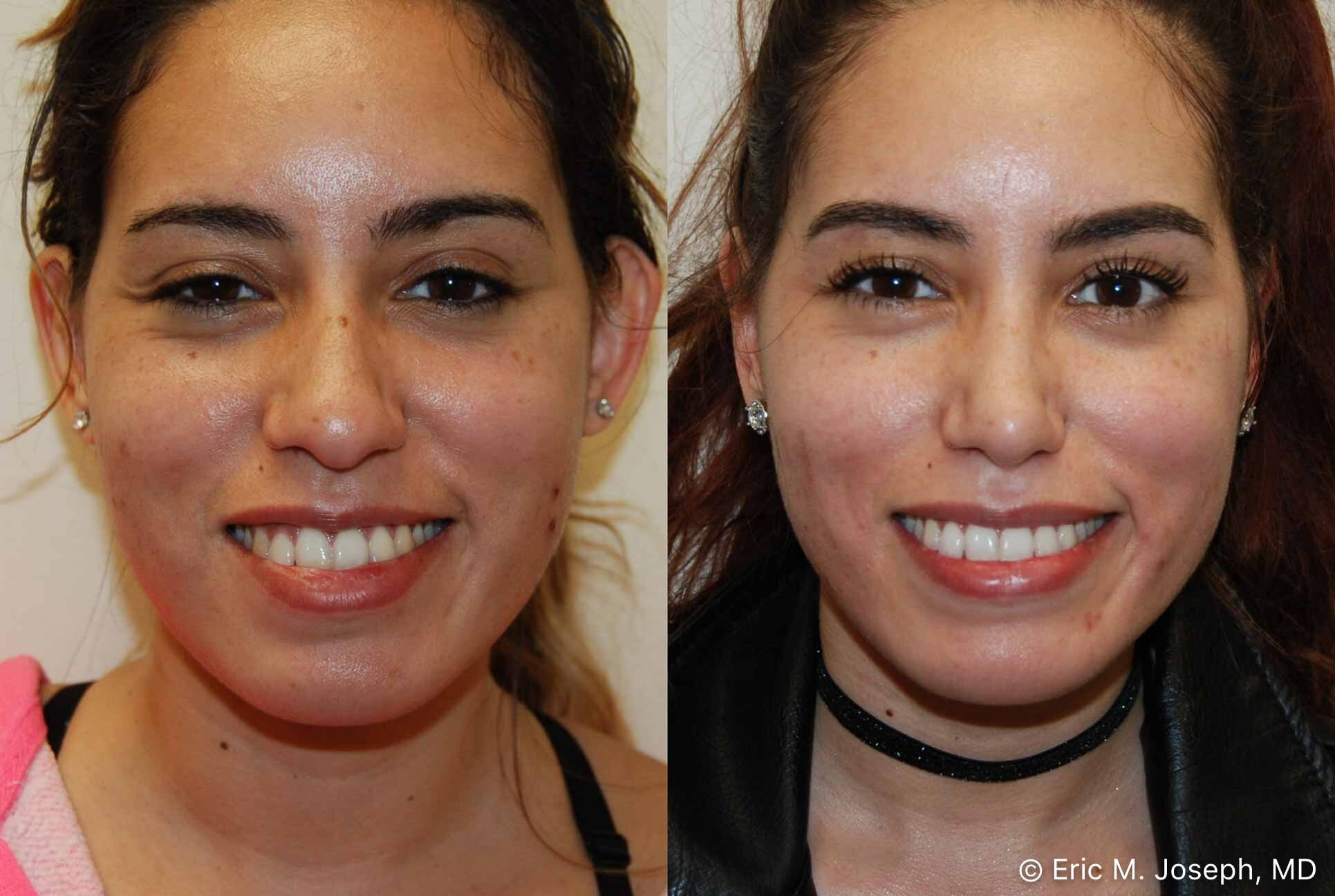
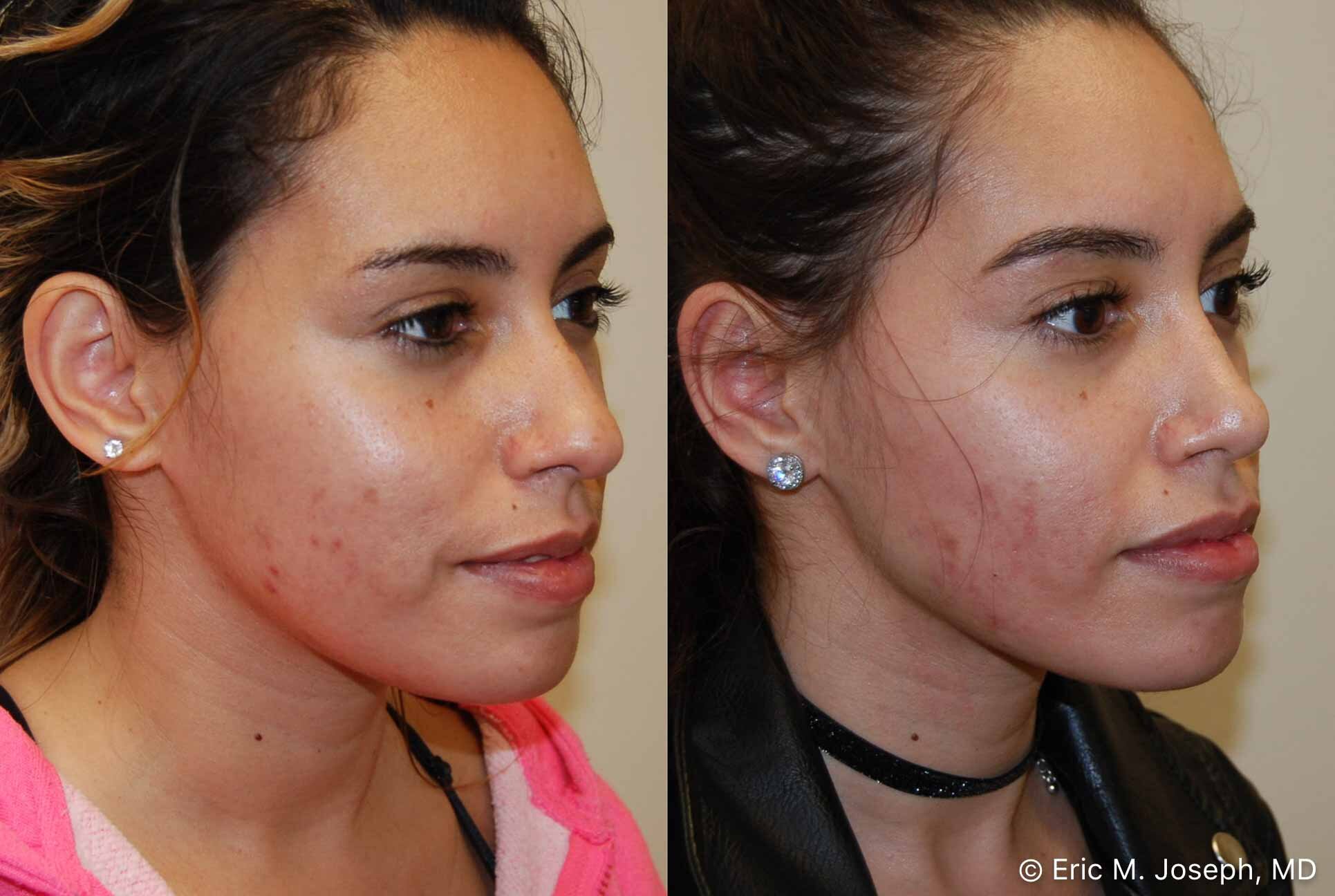
Our lovely patient is seen six months following revision rhinoplasty and otoplasty surgery to set back her outstanding ear appearance. After her first rhinoplasty, she was dissatisfied with a persistent dorsal hump and bulbous, droopy nasal tip appearance. She also was insecure about her ear appearance when her hair was in a ponytail. You can see a natural-looking ear appearance, and ears that don't stick out so far. Her otoplasty was performed with conchal setback sutures, and Mustarde sutures in both ears. Her nasal dorsal hump was removed, along with a nasal mole, and tip-plasty was performed.

Revision Rhinoplasty Before & After: Refine Profile and Tip Appearance

Revision Rhinoplasty #19

Our beautiful 33 year old patient is seen only 3 months following revision rhinoplasty. The goal was to refine her tip and nasal profile appearance and to allow her to breathe through her nose. Her previous surgeon resected too much nasal cartilage and her revision surgery required reconstruction of her internal and external nasal valves. This was performed with spreader grafts, and lateral crural extension grafts. Her turbinates were reduced as well.

Revision Rhinoplasty Before & After: Septoplasty and Hump Removal

Revision Rhinoplasty #18

Our 27 year old patient is seen 1 year after functional and cosmetic Revision Rhinoplasty Surgery. She was not happy with her nasal appearance and breathing after rhinoplasty was performed elsewhere. Her repair consisted of septoplasty, tip-plasty with rotation, residual hump removal, and repair of her internal nasal valves for a better breathing, and less distracting nasal appearance.